78 minutes of walking a day can prevent chronic back pain, reduce early death from heart disease
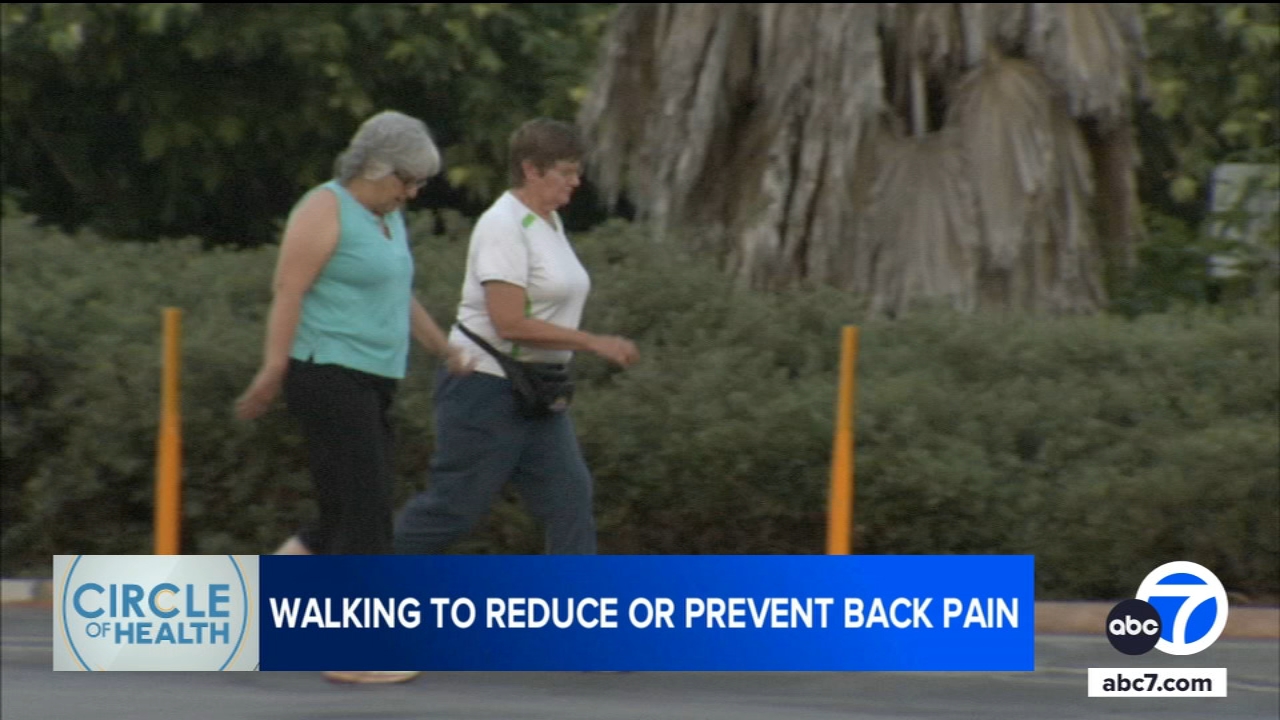


FULLERTON, Calif. (KABC) -- Ten thousand steps may be the goal, but a new study finds walking as little as 15 minutes of brisk walking daily may reduce your risk of early death from heart disease by up to 20%!
Also, only 7,000 steps a day can be enough to boost your brainpower and protect against dementia.
But how much walking do you need to prevent chronic back pain?
The ultimate number of minutes per day is 78.
One avid walker shows us how she reaches this goal and beyond.
As a nurse who oversees infection prevention, Claudia Skinner walks all over Providence St. Jude Medical Center.
"It depends on the day, but I'd say three to four miles," Skinner said.
Some nights the 71-year-old goes another three to five miles after work.
While many people her age are sidelined with chronic back pain, Skinner feels strong!
"My back is good," she said.
New research shows long walks could both treat and prevent chronic low back pain.
"I think that this is kind of what they've identified as the inflection point, and I think the take-home message is more is better," said Orthopedic Surgeon Dr. Harpreet Bawa with Dignity-Health Northridge Hospital.
Walking helps your back because it engages your core.



"Strengthening the center portions of your body, right? When you're upright, you're mobilizing. You are strengthening that area which then leads to a lower incidence of back pain," he said.
Standing desks and ergonomic chairs are no match for plain old movement.
"Anything that is more active or involves you engaging multiple parts of your body is going to be of benefit," Bawa said.
The study of 11,000 people in Norway found those who walked 78 daily minutes enjoyed a 13% lower risk of back pain. Those who racked up 100 minutes per day had a 23% reduction.
In the study, those who walked with higher intensity did see some added benefits, but those were less pronounced. So that tells you all you really need to do is get out there and walk. You don't have to do it all at once.
"Whether it's a lunch break or before work, whenever you can move more, I think you'll see the benefits," Bawa said.
When she can, Skinner prefers the stairs over the elevator.
"Absolutely! Always," she said.
She's worked at her hospital for 46 years. She says reaching her 50th will be a walk in the park.