LA Pride Parade traces roots to courage, protest and a fight for equality


LOS ANGELES (KABC) -- As the decades tick by, we often forget an event's origin. More importantly, we forget all it took to make the event happen in the first place.
56 years ago, the very first Pride parade was a breakthrough event. The culmination of rage, courage, and a desperate fight for equality.
A Harvard study says that joy is contagious. A person's happiness is influenced by the happiness of others.
But there is so much more to the bliss that you see in the film of the first Pride parade. How its participants got there, that's the real story.
"So few folks know that the first Pride parade was actually in Los Angeles, 1970 on Hollywood Boulevard. And look at that crowd," said May Hong HaDuong, director of the UCLA Film and Television Archive.
The archive holds what HaDuong described as the largest collection of LGBTQ+ moving images in the world, with 40,000 items documenting decades of history. Among them is archival footage from that first parade, capturing celebration but also the significance behind it.
"I really love the fact as a queer woman to see folks celebrating all walks of life, uh, just enjoying the day," HaDuong said.
The footage includes films shot around 1970 by Pat Rocco, described as a "journalist man on the street" who documented Los Angeles and queer history. His work captured moments inside spaces that had largely been hidden.
"People were really thinking about, you know, how to be themselves in the '70s, it's a moment of independence," HaDuong said.
But these simple films are not so simple. And it's part of why HaDuong finds them to be so important. To understand, let's go back just three years to the start of 1967.
"The raid started after midnight," activist Alexei Romanoff recalled in a 2017 interview.
Romanoff and David Farah described what happened at the Black Cat in Silver Lake, where a police raid became a flashpoint in the fight for LGBTQ+ rights. According to their accounts, celebrations inside the bar quickly turned into arrests.
"People sang, and then they went to hug and kiss. At that point, plain clothes officers were in the bar, and they began to grab people to arrest them for lewd conduct," Romanoff said.
"It was illegal to be gay or to act on it in any way, and it was also considered to be a mental illness, and that's true in all 50 states," Farah said.
Romanoff described a climate of fear at the time. "There were no gay bars that ever had open windows looking out or that you could look in, because the people were fearful about being outed," he said.
Actor and activist George Takei also recalled the risks. "I was going to gay bars in Los Angeles and older guys would warn me about occasional raids by the police," he said. "I always, you know, stood near the exit ... just in case."
Takei talks about how frightening it was to be in a gay bar in LA knowing that police were watching, especially for him. He was already famous from Star Trek.
Romanoff said the experience fueled anger and action. "I felt rage that human beings could be treated like that," he said.
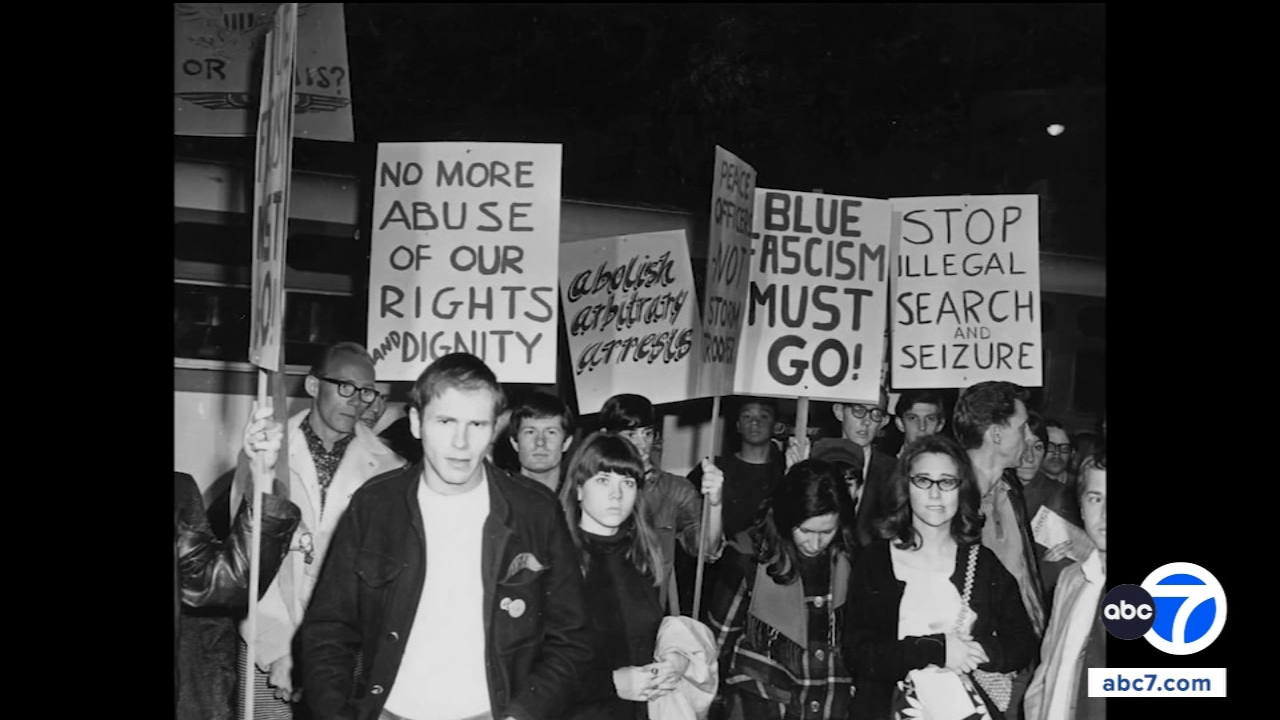
Despite the risks, activists organized protests, some of the first of their kind, with participants documented in photographs showing individuals speaking out publicly.
"There was fear of what might come out of it still, but there was a pride. But finally, we stood up for what was only right and that it would be right," Romanoff said.
The movement continued to grow. Police raids in New York City two years later led to the Stonewall Uprising, further solidifying the Pride movement nationally.
Within a year of those events - and three years after the Black Cat raid - the first Pride parade in Los Angeles took place, as seen in the archival footage preserved today.
"This kind of footage shows me that there are just so many people ready to congregate and be together, to consider themselves humans next to each other," HaDuong said.
Rocco's camera also captured scenes inside Joni's nightclub, offering a rare look into spaces that had once been hidden. Those images, interviewees said, were made possible by individuals willing to speak out despite the consequences.
"It brings back pride. For the first time people stood up and said I'm queer and I'm okay and you either like it or leave me alone," Romanoff said.
HaDuong said the meaning of those moments still resonates today.
"The closer we are to being near each other like this, the better we can understand each other," she said. "And I love that it feels not really like folks being spectators, but being part of the community, celebrating them."