Which U.S. area has best NFL players? Eight teams, Cup winner

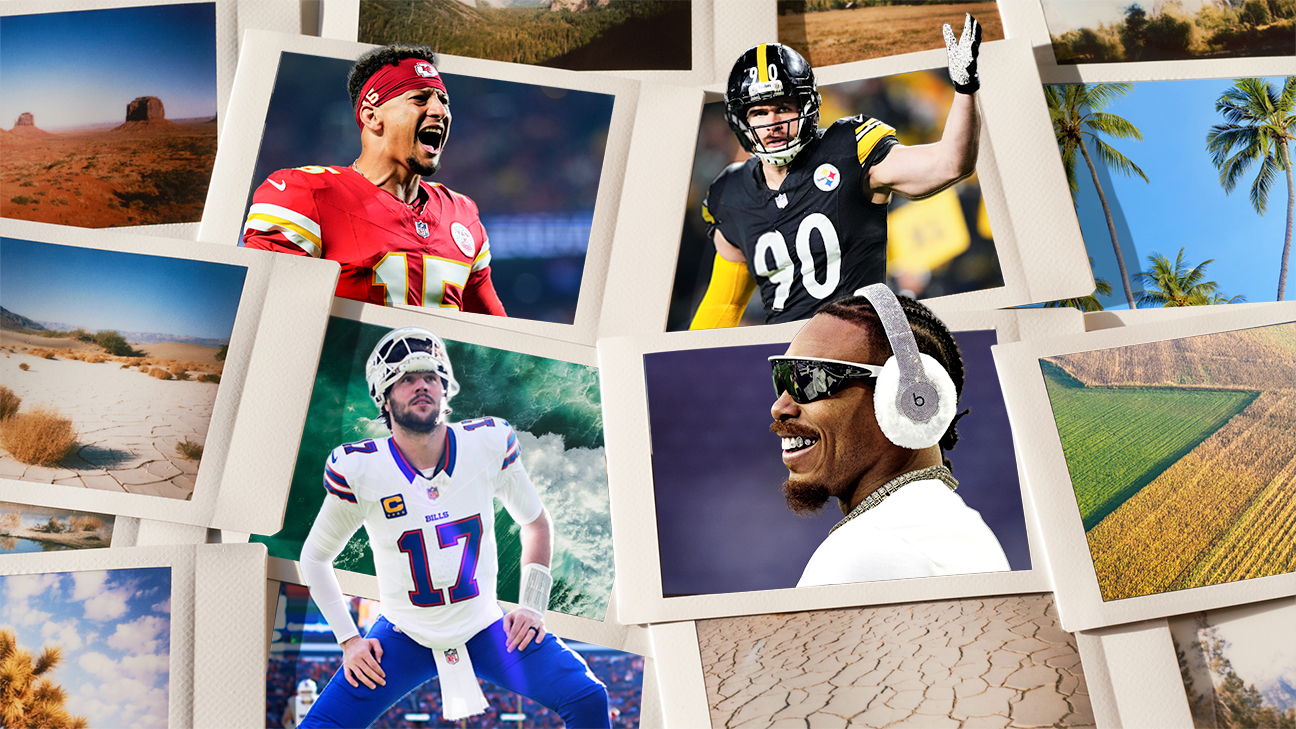
It has been a joy to watch this year's World Cup. With so many of the world's biggest stars showing up and scoring in bunches, all three host countries advancing to the knockout stages and more goals per game in the group stage than in any tournament since 1970, the planet's biggest sporting event has delivered in spades so far.
Naturally, of course, it would be a dream to see this for (our American brand of) football as well. There has been a World Cup of American Football in the past, but with so many players coming from the United States, it has generally been a one-sided affair. U.S. teams have lost games in international competition, and we'll see how flag football plays out in the 2028 Olympics, but a best-on-best international tournament involving the top players on the planet wouldn't be a fair fight.
Subscribe: 'The Bill Barnwell Show'
Of course, there's another way to frame things. Instead of an international competition, what if we turned this into a domestic battle divided by region? Australia has the State of Origin competition in rugby, in which players suit up for the area where they started their careers in what amounts to an all-star competition. State of Origin is a two-team competition, but across America, we could expand things quite a bit.
So, inspired by the World Cup, I've gone through active NFL rosters and split the country into eight teams. Different areas naturally have unique styles of play that have evolved as a product of everything from local weather to the influence of the college teams in the area. Today, we're going to see which of those eight teams can put together the best 30-man roster and win our totally made-up "Domestic Cup of American Football."
Let's start with my guidelines in putting together these rosters.
Jump to:
How we put together the rosters
California | Northeast | South Atlantic
Florida | Southeast | Southwest
Texas | Midwest
Who would win the DCAF?

How I put together these rosters
OK, here are the rules I used in putting together these lineups:
1. We're using 30-man lineups under specific constraints. On offense, each team has to select two quarterbacks, one running back, three wide receivers, one tight end, six offensive linemen and one bonus skill-position playmaker. On defense, they're lining up three edge rushers, three defensive tackles, two linebackers and six defensive backs. A kicker and a punter bring us to 30. Is this perfect? Of course not. But it allows us to get a representative sample of the stars each region can bring to the table.
2. We're building rosters to play in September 2026. With NFL players timing medical procedures and offseason plans to prepare to play real football in September, it only seems fair to build this tournament around that same timeframe. In this universe, the NFL has kindly decided to push the regular-season schedule back by a month so we can play the DCAF at the start of September. With that in mind, the injuries we saw from the 2025 season and their projected recovery times matter. Guys such asPatrick Mahomes, George Kittle and Micah Parsons would all be touch-and-go to make it to this tournament, while players like Tyreek Hill aren't going to be in.
I've tried to lean toward making players eligible if they seem likely to be available for Week 1 ... but if not, their regions will have to go in a different direction. And while I'm considering injuries heading into the tournament, I'm willing to assume these rosters will stay healthy throughout the fake tournament itself.
I'm willing to consider free agents who are eligible and expected to sign somewhere for the 2026 season, but players who have signed their retirement papers or publicly announced their retirements -- such asJoel Bitonio and Drew Dalman -- are out. There's no Tom Brady or Aaron Donald unretiring and sneaking his way into a lineup, either. Finally, 2026 rookies are eligible.
3. Eligibility is determined by where each player played high school football. Regional identity differs from person to person. Some people might feel like they best belong where they grew up as children. Other players might closely identify with where they played high school football. Others still might lean toward their college experience, and veteran NFL players who have spent their entire careers in one place might have built their lives in their professional stomping grounds. So, to keep things simple, I've applied a straightforward rule: Eligibility for this competition is determined by where each player played high school football, no exceptions.
I've relied on the high school data gathered byPro-Football-Reference.com to narrow down eligibility. The state where each player played high school football maps him onto a particular team. I've done my best to make sure I keep track of every significant NFL player, but there might be a stray star or two who fell through the cracks. (Just pretend they've retired from international football.)
But just as there are dual nationals with multicountry eligibility such as Folarin Balogun and Michael Olise in soccer, there are players who are eligible to play for multiple teams by that standard. Take someone like Titans tackleJC Latham, who played high school ball in Wisconsin before spending time at the IMG Academy in Florida. It seems reasonable to keep Latham eligible for one team or the other. In those cases, I tried to be realistic about picking where a player would choose to play. Was there a clear path to him starting for one team, whereas he would be on the bench for the other? It might feel like this would be a competitive advantage for a state like Florida, but that's also true for big nations who rely on dual nationals in the World Cup, America included.
4. No trades allowed. When you see these rosters, you're going to be stunned at how lopsided some of these lineups are. There are some regions that go 10-deep at one position with Pro Bowl-caliber players and can't even field an NFL starter in his prime at another. There are, somewhat inexplicably, multiple teams in this competition with a bunch of world-class wide receivers and nothing to offer at tight end. Others have great run games and no quarterback of note.
In the NFL world, these teams would trade from their surplus spots to land what they need. Club teams in the soccer universe would acquire players in the transfer market to address their weaknesses. Neither option is possible here. In the international game, teams need to build the best possible roster out of the players available, even if that's three world-class left backs and no recognized striker of note. The same thing is true here. I'm willing to make small adjustments to get the best players in the lineup, but I'm not moving players to positions they've never played or wouldn't realistically suit up for in an NFL game.
5. Not every area is represented. Here's where things get tricky. I tried to be vaguely realistic about separating the country into different regions and building teams that could call upon a roughly similar size of player pool. There's no way to build a team of players from Connecticut when there are only 18 active NFL players from the state in the league at the moment. At the same time, lumping some of the biggest states into superteams with their neighbors also felt like it wouldn't make for the most fun experience, either.
So, I split out the three most prominent football player-producing states and gave them their own teams. California, Florida and Texas are the state exclusives, making up three of our eight entrants into the tournament. The other five are regional. I relied on the Census Bureau definitions to help form some of those groupings, but I also wanted to be realistic about how football impacts those areas. There were some states that landed between two borders. Are Washington, D.C., and the DMV area part of the Northeast or the South? Is Louisiana part of the Southeast or the Southwest? In the end, I had to make choices that some might disagree with, but most of the regions should make enough sense.
With that being said, some areas weren't able to form full, competitive teams. I didn't build an international team, so Canadians, Australians and others aren't included in this competition. Alaska and Hawaii are also out. Within the domestic 48 states, there wasn't enough of a Pacific Northwest group to form a viable roster. And a team built around players from Idaho, Montana, North Dakota, Oregon, South Dakota, Washington and Wyoming would include stars such asJustin Herbert and Budda Baker, but it would field only 94 active NFL players. It would have been a struggle to even piece together a 30-man roster of starting-caliber talent, let alone one that could compete with some of the superteams you'll see in a minute. Let's say that they lost in qualifying.
OK, enough about the preamble. The fun part is seeing the rosters, so let's take a look at our eight teams. At the end, I'll eliminate four and have a three-game knockout to pick a winner.
California
Let's start with a simple one. Some of these teams are going to encompass as many as 10 states. California is just California. Of course, per Pro-Football-Reference.com, there were 287 active players in the NFL last year who played their high school ball in the Golden State, a figure topped only by Texas and Florida. As you'll see, California has no trouble supporting a full team with room to spare.
QB: Josh Allen, Bills;Jayden Daniels, Commanders
We start with a true embarrassment of riches. California has more high-end quarterback options in its pool than any other state. Allen was an obvious pick, but the second quarterback selection led me to choose between Daniels, Jordan Love, C.J. Stroud, Jared Goffand Sam Darnold. And that doesn't even consider Aaron Rodgers, who played his high school (Chico), junior college (Butte) and college (California) ball in-state. You'll see how rough things are for some of the other states around the country in a bit.
RB: Tyler Allgeier, Cardinals
Here's a classic example of what we see in both these fake rosters and the real World Cup -- rosters might be stacked at one spot and inexplicably, bizarrely thin at another. For all the quarterbacks the state has produced, California is surprisingly bereft at running back. Several viable backs (Cam Skattebo, Zach Charbonnetand Najee Harris) are all coming off season-ending injuries, but even they wouldn't qualify as stars relative to what California sports elsewhere around its roster. Allgeier is a solid back, but he might not be a starter on any of the other teams on this list.
WR: Amon-Ra St. Brown, Lions;Drake London, Falcons;Chris Olave, Saints;Davante Adams, Rams
TE:Brock Bowers, Raiders
The good news is this offense will never need to run the ball, with Adams' prowess as a touchdown machine near the goal line helping take things over in short yardage. I'm not factoring in return responsibilities, but Rashid Shaheed could have figured in as the final wideout if we needed a return man. Bowers is a much-needed tight end for California, as the next man up might have been Greg Dulcich or Josh Oliver.
OT: Josh Simmons, Chiefs;Kolton Miller, Raiders
G: Alijah Vera-Tucker, Patriots;Aaron Banks, Packers;Patrick Mekari, Jaguars
C: Luke Wattenberg, Broncos
It's not a great line relative to others around the country, so it's a good thing we'll have quarterbacks who can improvise and create out of structure. Nobody on this O-line played a full 17-game season a year ago, but this won't be treated like a long tournament.
Edge: Tuli Tuipulotu, Chargers;Jaelan Phillips, Panthers;Laiatu Latu, Colts
DT: Vita Vea, Buccaneers;Kenny Clark, Cowboys;Arik Armstead, Jaguars
It's not the stiffest defensive line, either, although there are great athletes up front to chase down quarterbacks in the shootouts California will inevitably play. Tuipulotu and Phillips might both be best lining up on the interior and rushing against guards or getting to the quarterback on twists and stunts. There isn't that single devastating pass rusher who can take over games that we see elsewhere.
LB: Fred Warner, 49ers;Carson Schwesinger, Browns
Schwesinger takes over for Bobby Wagner, who would have been in this lineup for 15 years and a sentimental pick to make the California team for yet another cycle. Warner will be coming back from a season ruined by injury, but there's no way the California selectors are keeping him off the team.
CB: Trent McDuffie, Rams;D.J. Reed, Lions;Jaylon Johnson, Bears;Deommodore Lenoir, 49ers
S: Calen Bullock, Texans;Cam Bynum, Colts
Two players who will spend their 2026 seasons in California (McDuffie and Lenoir) line up for the California team in our tournament. McDuffie, Lenoir and Bynum give this team plenty of options with slot experience, and Bullock is a physical force who can hold his own in coverage if the defensive coordinator wants to blitz.
K: Nick Folk, Falcons
P: Bryan Anger, Cowboys
California is loaded with high-profile quarterbacks and wide receivers, but the rest of the roster might struggle to keep up with the depth of talent around the country. Let's go to the other side of the nation and check out a multistate option to compare.
Northeast
Connecticut, Delaware, Massachusetts, Maine, New Hampshire, New Jersey, New York, Pennsylvania, Rhode Island and Vermont
Is it fair that California has to make a team out of one state's talents while the Northeast can call on 10? You be the judge, but keep in mind that most of this roster comes from New Jersey and Pennsylvania. Four of the states didn't contribute a single player, while several more contributed no more than two.
QB: Joe Flacco, Bengals;Will Levis, Titans
Yep, I double-checked. The only quarterbacks who racked up even a single passing yard from this region last season were Flacco and Kenny Pickett. And I chose Levis over Pickett as the second quarterback. There weren't even any options I could have chosen from this year's draft. I didn't even mentionBryce Youngas a candidate in California, and he would be the obvious starter here.
The Northeast not having any quarterbacks after so many superstars came out of Pennsylvania over the years is like the United States fielding Premier League keepers for decades and not having anyone playing at a high level in Europe for the 2026 World Cup.
RB: Saquon Barkley, Eagles;Jonathan Taylor, Colts
This team is the antithesis of California. Barkley and Taylor will be the focal points of what will be a run-heavy and play-action-based team given the options at quarterback. D'Andre Swift would be the clear favorite to start for California if he were eligible; instead, he doesn't make the Northeast team behind these two stars.
WR: DJ Moore, Bills; Chris Godwin Jr., Buccaneers; Marvin Harrison Jr., Cardinals
TE: Kyle Pitts Sr., Falcons
This would have been a fun group of wide receivers two years ago, when Moore and Godwin were playing at a much higher level and Harrison was still the best wide receiver prospect of the past decade. Pitts had a resurgent season in 2025, but none of his teammates at wide receiver can say the same, which should reinforce how heavily this offense will lean into the run.
OT: Dion Dawkins, Bills;Mike McGlinchey, Broncos
G: Quenton Nelson, Colts;Chris Lindstrom, Falcons;Jonah Jackson, Bears
C: Connor McGovern, Bills
This is a big, athletic offensive line, with Nelson and Lindstrom as the focal points at guard. Dawkins remains an underrated cornerstone at left tackle even into his mid-30s.
Edge: Josh Hines-Allen, Jaguars;Jared Verse, Browns;Abdul Carter, Giants
DT: Zach Allen, Broncos;Christian Barmore, Patriots;Teair Tart, Chargers
The Northeast's best player is sadly injured for the tournament, given that Micah Parsons isn't expected to start the season on the active roster after undergoing surgery on anACL and meniscus. Unlike Canada in the World Cup, the Northeast won't be carrying its injured top star as a decoy, opening up a spot in the lineup for Carter and his wild pressure numbers from 2025 as a result. Allen is a very productive penetrating tackle, which would make him a perfect pair for Tart, who would serve as the two-gapping nose tackle alongside.
LB: Alex Anzalone, Buccaneers;Zaire Franklin, Packers
Warner and Schwesinger of California might have set the bar too high for linebackers elsewhere around the nation. Anzalone's range makes him a valuable player in pass coverage, but there aren't many great off-ball linebackers in the current Northeast pool.
CB:Joey Porter Jr., Steelers; Mike Sainristil, Commanders; Tarheeb Still, Chargers
S: Minkah Fitzpatrick, Jets;Jaquan Brisker, Steelers;Will Harris, Commanders
Outside of Fitzpatrick, this is one of the younger secondaries you'll see. Porter is the clear star here and has to be comfortable defending the opposing region's top wideout week after week to make this secondary work.
K: Brandon McManus, free agent
P: Riley Dixon, Broncos
There's a clear offensive identity for the Northeast, and it should be able to run the ball effectively, but it is compromised at quarterback and has its best player sidelined for the tournament by a serious injury. Let's move further down the East Coast.
South Atlantic
Maryland, North Carolina, South Carolina, Virginia, West Virginia andWashington, D.C.
You could argue that D.C. and its suburbs might be considered part of the Northeast, which would add a much-needed quarterback to that roster. Instead, the top QB from the D.C. area --Caleb Williams--ends up as the backup for this collection of states.
QB: Drake Maye, Patriots; Caleb Williams, Bears
The much-vaunted quarterback class of 2024 sends two of its top three picks to compete for the starting job here. Maye seems like the clear favorite to me given that he was better than Williams in both 2024 and 2025, but don't tell Bears general manager Ryan Poles.
RB: Omarion Hampton, Chargers;TreVeyon Henderson, Patriots
Could this be a golden generation forming for the South Atlantic on offense? Two players from the subsequent year's class added life to what had otherwise been an underwhelming group of ball carriers out of the backfield. Hampton flashed real power and explosiveness before missing most of his rookie season with an ankle injury, while Henderson was a threat as a pass catcher and a big-play generator for the Patriots. The next backup might have been Blake Corum, who was with the quarterbacks in the 2024 draft.
WR: Stefon Diggs, free agent;Jordan Addison, Vikings;Deebo Samuel, free agent
TE: Tyler Warren, Colts
Warren adds to the recent draftees on the offensive side of the ball, but Diggs and Samuel are two veterans who would have been part of this team for quite a few years now. They should still find starting roles in the NFL in 2026, although I imagine both would have expected to land on a roster by now.
OT: Christian Darrisaw, Vikings;Darnell Wright, Bears;Olu Fashanu, Jets
G: Landon Dickerson, Eagles;John Simpson, Ravens
C: Zach Frazier, Bears
There's youth at tackle and center here, where Frazier is one of the best young pivots in the game. Darrisaw was excellent before suffering a serious knee injury during the 2024 season; he didn't look like his usual self after returning last year, which could open up the left tackle job for Fashanu. The guard combination might be past its best, with Dickerson reportedly considering retirement before returning for another year with the Eagles. Another solid line, but there are better ones to come.
Edge: DeMarcus Lawrence, Seahawks; Byron Young, Rams; Alex Highsmith, Steelers
DT: Dexter Lawrence II, Bengals; Kobie Turner, Rams; Jordan Davis, Eagles
Goodness gracious. The strength of this team is at defensive tackle, where NFL starters Bryan Bresee and Javon Kinlaw weren't able to come close to cracking the lineup. Turner would be a dream fit next to either Dexter Lawrence or Davis, and I'm not sure how any interior offensive line is going to block these guys on a regular basis. There's underrated talent across the board outside on the edge, too, with DeMarcus Lawrence proving his value as a two-way edge defender after joining the Seahawks last season.
LB: Tremaine Edmunds, Giants;Drake Thomas, Seahawks
This is an athletic but undersized pair of starting linebackers. They wouldn't be a great fit in some places, but they'll be solid behind our trio of elite defensive tackles, who will keep linemen from getting to the second level.
CB: Cobie Durant, Cowboys;Mansoor Delane, Chiefs;Ja'Quan McMillian, Broncos;Cam Hart, Chargers
S: Nick Emmanwori, Seahawks;Nick Cross, Commanders
Emmanwori completes the set and gives the South Atlantic a member of the Seahawks' defense at every level. Delane becomes the first rookie to crack a lineup, as the sixth pick steps right into this cornerback room as an option on the outside. Although Delane finished his college career at LSU, he went to high school in Maryland and played his first three years of NCAA eligibility at Virginia Tech.
K: Tyler Bass, Bills
P: Jordan Stout, Giants
The South Atlantic finishes with relatively strong specialists. There's a lot of youth and upside on this team, but it's thinner at wide receiver and in the secondary than most of the competition. This team might be one cycle away ... imagine how good the young guys on this roster will be in four years.
Florida
Let's complete the trip down the Eastern Seaboard by hitting another single-state entry. Florida is loaded with star power, but does it have the depth to keep up with some of the larger regions?
QB: Lamar Jackson, Ravens;Fernando Mendoza, Raiders
Jackson was an easy pick. The spot behind the former Boynton Beach star would have been the subject of annual turnover, as Mac Jones,Michael Penix Jr.and J.J. McCarthy have all cycled in and out of NFL hype. Can Mendoza buck that trend and live up to expectations in Las Vegas?
RB: Derrick Henry, Ravens;James Cook III, Bills
Henry might have been an even easier selection than Jackson, as his work at Yulee High School is the stuff of legend. Cook helps form a very good 1-2 punch out of the backfield.
WR: Zay Flowers, Ravens;Christian Watson, Packers;Calvin Ridley, Titans
TE: Oronde Gadsden, Chargers
Another Ravens player joins the team in Flowers, giving Jackson plenty of familiar playmakers in the offense. Former Jackson associateHollywood Brownmisses out on the 30-man roster, though. And there wasn't much at tight end, where Gadsden and Tyler Higbee were the primary options.
OT: Laremy Tunsil, Commanders; Jawaan Taylor, Falcons; JC Latham, Titans
G: Tyler Steen, Eagles;Cesar Ruiz, Saints
C: Robert Hainsey, Jaguars
Tunsil is a standout at left tackle, but the rest of the line isn't up to the same caliber. To even field a competent unit, Florida needed to get "dual nationals" Latham (who could have played in the Midwest) and Ruiz (Northeast) to join the roster. Those guys wouldn't have made their respective other regional rosters, but they'll be in the mix to start for Florida.
Edge: Nick Bosa, 49ers;Trey Hendrickson, Ravens;Nik Bonitto, Broncos
DT: Jalen Carter, Eagles;Leonard Williams, Seahawks;Jer'Zhan Newton, Commanders
That's more like it, as Florida sports an elite set of edge rushers and a pair of excellent tackles in Carter and Williams. Florida's deepest position is on the edge, as the likes of Brian Burns,Greg Rousseauand Khalil Mack all missed out.
LB: Azeez Al-Shaair, Texans;Jihaad Campbell, Eagles
Florida is betting on Campbell's upside as the second starting linebacker by taking him to the tournament ahead of veterans such asDevin Bush and Denzel Perryman.
CB: Pat Surtain II, Broncos; Devon Witherspoon, Seahawks; Quinyon Mitchell, Eagles; Jamel Dean, Steelers
S: Derwin James Jr., Chargers; Joshua Metellus, Vikings
Have fun trying to complete passes on these guys. Behind the excellent pass rush, Florida might have the three best cornerbacks on the planet in the lineup together. And if that weren't enough, it can call on James as a playmaker in the box and Metellus as the shape-shifting, do-everything option in center field. Florida is going to play man coverage 95% of the time and laugh in your face while doing it.
K: Cairo Santos, Bears
P: Tommy Townsend, Texans
Florida is a bit too dependent on its stars on the offensive side of the ball, and this isn't as impressive of a wide receivers room as you might expect. But there's a historically great pass defense brewing here between the pass rush and the secondary, so I'm not sure how anyone's going to be able to steadily throw on this team.
Southeast
Alabama, Georgia, Kentucky, Mississippi and Tennessee
Georgia could have very easily justified its own team given the talent it has throughout the state. Instead, it is joined by a handful of SEC stalwart states here.
QB: Trevor Lawrence, Jaguars;Bo Nix, Broncos
There's a bit of a college disconnect happening here. We associate Lawrence with South Carolina and Florida from his time with Clemson and the Jaguars, respectively, but he spent his high school career northwest of Atlanta in Cartersville. And it seems natural to assume that Matthew Stafford might have played his high school ball in Georgia before joining the Bulldogs, but the reigning league MVP grew up elsewhere. We'll get to him in a bit.
RB: Jahmyr Gibbs, Lions
There has been a steady stream of elite backs coming out of the Southeast over the past decade, with Alvin Kamara and Nick Chubb giving way to Gibbs as one of the best hybrid runners in all of football.Kenneth Walker IIIand Quinshon Judkins might have been hoping to make this team as the playmaker-at-large, but there were just too many wide receivers to fit in the lineup.
WR: George Pickens, Cowboys;A.J. Brown, Patriots;Nico Collins, Texans;DK Metcalf, Steelers
TE: Chig Okonkwo, Titans
While there's lots of Georgia influence throughout this team, wide receiver is one of the few positions that didn't bring a player from the Peach State along for the ride. Instead, there are two Alabama products (Collins and Pickens) and two high schoolers from Mississippi (Brown and Metcalf, who of course then went on to team up as Rebels at the college level). Despite producing so many large, talented wide receivers, though, the Southeast hasn't been as productive at tight end. Can't Mississippi product Tee Higgins just convert to tight end to make it onto this roster?
OT: Charles Cross, Seahawks;Andrew Thomas, Giants;Orlando Brown Jr., Ravens
G: Trey Smith, Chiefs;Elgton Jenkins, Browns
C: Graham Barton, Buccaneers
This is a different caliber of offensive line, with Pro Bowl-level players throughout the lineup. Jenkins struggled at center last season before being released by the Packers, but assuming his recovery from a fractured leg is on pace, the veteran should be able to reach his prior levels of play as one of the league's more underrated guards.
Edge:Will Anderson Jr., Texans;Jonathan Greenard, Eagles;Travon Walker, Jaguars
DT: Jeffery Simmons, Titans;Chris Jones, Chiefs;Quinnen Williams, Cowboys
And you thought the interior of the South Atlantic's defensive line was scary. The second team for the Southeast at defensive tackle would be Cameron Heyward, Derrick Brownand Grover Stewart, who would all be starters in most regions around the country.
The edge trio isn't quite as deep as the South Atlantic's or Florida's, but Anderson is a superstar who will face endless one-on-ones. The Southeast can also shift Jones outside to the edge on passing downs to get Williams and Simmons on the field together.
LB: Roquan Smith, Ravens; Ernest Jones IV, Seahawks
If any back manages to make it past that interior defensive line, Smith and Jones would form one of the more intelligent and reliable duos in football.
CB: DJ Turner II, Bengals; Nate Wiggins, Ravens; Jaycee Horn, Panthers; A.J. Terrell Jr., Falcons
S: Kyle Hamilton, Ravens;Xavier McKinney, Packers
Georgia sends all six of these defensive backs to the Southeast roster. This isn't quite as otherworldly as Florida's secondary, but it's one of the better units in football, with Hamilton as the star safety around four young, talented cover corners. McKinney should have plenty of opportunities to roam around for takeaways in center field.
K: Harrison Butker, Chiefs
P: AJ Cole, Raiders
This might be the best team we've seen so far. Consistency at quarterback might be a concern given how Lawrence and Nix can fluctuate between hot and cold from week to week, but there's no other obvious weak spot and the roster boasts elite pools at wide receiver and defensive tackle.
Southwest
Arkansas, Arizona, Colorado, Louisiana, Oklahoma, Nevada, New Mexico and Utah
I can see an argument for splitting this group into two teams and/or folding Louisiana into the Southeast, especially if Georgia was its own team. With Georgia in the Southeast, though, and Texas getting its own roster, I decided to go with the Census Bureau's regions and lump Louisiana in with states such as Colorado and Utah as part of a broader Southwest. There's one position where that really matters, as this ends up as a very lopsided set of players.
QB: Dak Prescott, Cowboys;Brock Purdy, 49ers
There's steady quarterback play atop the Southwest, as Prescott and Purdy make it ahead of second-year pros Jaxson Dart and Tyler Shough. Both have been blessed to play with elite talent for most of their careers, and when you see what they have in the playmaker spots, you'll know that things won't be changing here in this DCAF competition.
RB: Bijan Robinson, Falcons;Christian McCaffrey, 49ers
Try picking a starter between these two. Both obviously became national household names for work they did at Texas and Stanford, respectively, but despite California crying out for a back, they both qualify for the Southwest team by our regional definitions. Backs such asJosh Jacobs and Rhamondre Stevenson must feel like they were born in the wrong part of the country, as they're talented and have no hope whatsoever of cracking this lineup.
WR:Ja'Marr Chase, Bengals; Justin Jefferson, Vikings; Puka Nacua, Rams
TE: Trey McBride, Cardinals
And you thought the running backs were good. We're reuniting the LSU duo of Chase and Jefferson for another go-around in this tournament as Louisiana products, and for good measure, we're adding arguably the best wideout in football from a year ago in Nacua. Prescott is not going to know whom to target! Louisiana could also sendDeVonta Smith, Brian Thomas Jr. or even the injured Malik Nabers here.
Oh, and just for fun, the Southwest also has the deepest tight end room in the country. George Kittle would have been fighting with McCaffrey, his 49ers teammate, for the playmaker-at-large spot in this lineup if he were healthy, while the likes of Mark Andrews, Dalton Kincaidand Hunter Henry all miss out behind McBride. This honestly feels unfair.
OT: Penei Sewell, Lions; Garett Bolles, Broncos; Ronnie Stanley, Ravens
G: Kevin Dotson, Rams;Kingsley Suamataia, Chiefs
C: Creed Humphrey, Chiefs
Oh, and just in case the playmakers aren't enough, there are a couple of young guys on track for Hall of Fame nods in Sewell and Humphrey. Sewell can kick back out to right tackle to accommodate Bolles or Stanley on the left side. There's one obvious huge weak spot at guard with Suamataia; if the Packers had kept Zach Tom at guard and we could slot the now-tackle there, this might be an offense without a single below-average starter and a handful of true superstars.
Edge: Cameron Jordan, Saints; Calais Campbell, Ravens; Kyle Van Noy, free agent
DT: Roy Lopez, Texans;Malcolm Roach, Broncos;Davon Godchaux, Saints
And then you get to the defensive line, and suddenly, everyone else has a chance. There are some solid players here, and Jordan and Campbell should get serious Hall of Fame consideration once they retire. But after looking at rosters full of superstar defensive linemen, this is a bunch of mid-30s edge rushers and rotational defensive tackles. I even had to move Campbell, who is really a defensive tackle, out to the edge to form a six-man unit.
How could a region that's so stacked with talent elsewhere, even along the offensive line, have so little in the way of defensive linemen? With no interregional trades, the surpluses the Southwest has at wide receiver and running back can't land it a much-needed pass rusher (... or three).
LB: Edgerrin Cooper, Packers;Patrick Queen, Steelers
At least there's plenty of athleticism at linebacker, where Cooper and Queen should have no trouble covering from sideline to sideline.
CB: Derek Stingley Jr., Texans; Byron Murphy Jr., Vikings; Donte Jackson, Chargers; Dax Hill, Bengals
S: Justin Reid, Saints;Kam Curl, Rams
The secondary has a true superstar in Stingley and a pair of corners coming off Pro Bowl-caliber seasons in Murphy and Jackson. But again, we're not looking at a ton on the defensive side of the ball relative to other teams.
K: Cam Little, Jaguars
P: JK Scott, Chargers
Get ready for 51-49 shootouts on a game-by-game basis. The Southwest is the perfect example of how you can't count on reliably spreading your talent throughout each position in an equal fashion. The second-team Southwest offense of players who didn't make the 30-man roster might be better than the first-team lineup for most of the other regions around the country, but this is unquestionably the weakest defense in the nation.
Texas
Per Pro-Football-Reference.com, no single state has sent more active players to the NFL than Texas. Even if we don't include anybody from "Friday Night Lights," Texas is popularly regarded as the country's hotbed of high school football. Does that lend itself to a competitive team against larger regions?
QB: Matthew Stafford, Rams; Patrick Mahomes, Chiefs
Well, we're off to a good start, huh? The reigning MVP and arguably the best player of his generation start Texas off at quarterback. I'm willing to believe that Texas would bring Mahomes as the second quarterback given that he's at least plausibly ready to start Week 1, but Stafford will be the lead signal-caller for now. And if Mahomes isn't ready, Texas could call upon Jalen Hurts or Baker Mayfield as an injury replacement.
RB: De'Von Achane, Dolphins
Plenty of great backs have come through the University of Texas, with Bijan Robinson as the most prominent recent example, but this is a relatively lean era for active backs from the state. Achane's speed and big-play ability make him a perfect fit for the spread, although I imagine that Ashton Jeanty could figure into the mix here if he gets on track with the Raiders in 2026.
WR: Jaxon Smith-Njigba, Seahawks;CeeDee Lamb, Cowboys;Garrett Wilson, Jets;Mike Evans, 49ers
TE: Durham Smythe, Ravens
Stafford is blessed to work with Puka Nacua and Davante Adams in Los Angeles, but this would be a devastating foursome of star wideouts. Evans holds on to the fourth spot here ahead of the Denver duo of Courtland Sutton and Jaylen Waddle. It might not be quite as good as what the Southwest just threw at the rest of the nation, but this group even complements each other well stylistically.
And like the Southeast, a stacked wide receivers room with big bodies somehow didn't leak any future stars to tight end. It would understandably seem weird that Texas hasn't produced anyone better than a solid journeyman in Smythe, but the other veteran options were players likeJa'Tavion Sandersand Kylen Granson. Eagles second-round pick Eli Stowers could be the future at the position, but he's also more of a move tight end than a traditional in-line option, and we aren't exactly hurting for receiving options with this roster.
OT: Trent Williams, 49ers;Lane Johnson, Eagles;Rashawn Slater, Chargers
G: Tyler Smith, Cowboys;Robert Hunt, Panthers
C: Aaron Brewer, Dolphins
And then you add the best offensive line we've seen so far to the mix. There are real injury concerns here -- Slater and Hunt are coming off seasons ruined by injuries, while Williams and Johnson are at the end of their careers and miss action every year -- but this is an incredibly high-floor unit with the potential to physically dominate teams up front. Brewer was my first-team All-Pro center for 2025.
Edge: Myles Garrett, Rams;Danielle Hunter, Texans;Maxx Crosby, Raiders
DT: Milton Williams, Patriots;Ed Oliver, Bills;Byron Murphy II, Seahawks
The hits keep coming on the edge, where there are three Hall of Fame-caliber players still each performing at elite levels. There's a huge drop-off from Crosby to the rest of the edge rusher pool, so there's no way Texas is letting concerns about his knee keep the Raiders star off the roster. Defensive tackle isn't quite as stacked, but Williams and Murphy both had excellent seasons for teams that made it to the Super Bowl, and Oliver is a difference-maker when he's healthy.
LB: Jordyn Brooks, Dolphins;Nick Bolton, Chiefs
Brooks was the other Dolphins player who performed like a first-team All-Pro despite being stranded on a bad team. You might want more of a pure cover linebacker in the mix here, but these are two excellent, instinctual players in the box who can both blitz and rack up TFLs.
CB: Christian Gonzalez, Patriots;Riq Woolen, Seahawks;Zyon McCollum, Buccaneers
S: Antoine Winfield Jr., Buccaneers; Jalen Pitre, Texans; Tre'von Moehrig, Panthers
Texas isn't quite as stacked in the back end as some other regions of the country, although it has an elite man cornerback to build the defense off in Gonzalez. Winfield, Moehrig and Pitre offer all kinds of range and disguised coverage possibilities given their ability to play in the slot, as a deep defender or in the box.
K: Chris Boswell, Steelers
P: Thomas Morstead, free agent
There's an elite offense here with plenty of firepower, and no quarterback on the planet would want to go up against the best edge-rushing trio in the tournament. Texas has some weaker spots on defense, though, and this is another team that would be playing shootouts every time out.
Midwest
Illinois, Iowa, Indiana, Kansas, Michigan, Minnesota, Missouri, Nebraska, Ohio and Wisconsin
Our eighth and final regional team comes from the Heartland. Can the Midwest keep up with the offenses we've seen pop up around the country?
QB: Joe Burrow, Bengals;Kirk Cousins, Falcons
It is off to a good start, with Burrow stepping in as the starting quarterback. There's a big drop-off from the former Ohio high school football star to the rest of the pack here, as the next-best options are Cousins,Mitchell Trubiskyand Jimmy Garoppolo, the latter of whom might be considering retirement. It's going to be essential for the Midwest to keep Burrow healthy; thankfully, there's a very good offensive line lurking ahead.
RB: Breece Hall, Jets;Jeremiyah Love, Cardinals
Here's a great one-two punch at running back. Love hasn't yet proved himself as an NFL player, but his potential coming out of Notre Dame has him sneaking ahead of Bucky IrvingandDavid Montgomery(and a handful of tight end options) for the final playmaker spot.
WR: Terry McLaurin, Commanders;Jameson Williams, Lions;Alec Pierce, Colts
TE: Travis Kelce, Chiefs
We've put together some dream wide receiver rooms in this exercise, but is Burrow the only quarterback who might prefer his real-life options at receiver to what he gets as part of the Domestic Cup of American Football? There's real talent here between McLaurin, Williams and Pierce, of course, but there's no Ja'Marr Chase to really dominate opposing offenses.
Kelce is in the Cristiano Ronaldo spot as the veteran who is going to stay on the field until the wheels come off. His appearance on this team is surely the biggest news the Chiefs tight end will make this week.
OT: Tristan Wirfs, Buccaneers;Joe Alt, Chargers;Spencer Brown, Bills
G: Peter Skoronski, Titans;Quinn Meinerz, Broncos
C: Tyler Linderbaum, Raiders
An absolutely devastating offensive line is the Midwest's greatest strength. There's even left tackle/right tackle flexibility with Wirfs and Alt. Skoronski, Meinerz and Linderbaum form an utterly professional and reliable trio in the middle, but the stars here are at tackle. And unlike the Texas duo of Trent Williams and Lane Johnson, the Midwest's stars are in the prime of their careers.
Edge: Aidan Hutchinson, Lions;T.J. Watt, Steelers;Andrew Van Ginkel, Vikings
DT: Keeanu Benton, Steelers;Braden Fiske, Rams;Zach Sieler, Dolphins
Hutchinson finally gets some help rushing the quarterback. Even if Watt has slipped a bit from his peak a couple of years ago, the Steelers star remains a physically impactful rusher who would see far more one-on-ones in this defense than he does in Pittsburgh. Benton and Fiske are two of the better young defensive tackles in the game. And while I could see a case for George Karlaftis orWill McDonald IVas the third edge rusher, Van Ginkel's aptitude for creating takeaways is going to matter on this defense. Interceptions and forced fumbles might be the only way to stop some of the opposing offenses.
LB: Zack Baun, Eagles;Jack Campbell, Lions
There's plenty of range and disruptive ability here, as Baun and Campbell combined for 8.5 sacks and 16 tackles for loss a year ago.
CB: Sauce Gardner, Colts;Denzel Ward, Browns;Cooper DeJean, Eagles
S:Jessie Bates III,Falcons;Julian Love, Seahawks;Bryan Cook, Bengals
There's a perfect fit here at cornerback, with Gardner and Ward able to play man on the outside and DeJean sticking as arguably the league's top slot corner. Bates' instincts and ball skills add another potential turnover creator on this defense.
K: Jake Elliott, Eagles
P: Jack Fox, Lions
If you subscribe to the idea that the best team in the trenches wins, it's tough to argue with what the Midwest has up front protecting Burrow. There's also a quietly impressive group of cornerbacks and playmakers at all three levels of the defense.
Is there enough to prevail? Well, it's time to sort things out.
Who wins?
Let's reduce the field to four. I'll start by eliminating the Northeast, which is missing its best player in Micah Parsons and doesn't have a competitive QB situation with Joe Flacco and Will Levis under center. Those are two volatile options, and although we know that Flacco can beat anybody on the right day if he gets hot, I don't love that team's chances against elite pass rushes given the quarterback options.
The South Atlantic region is probably one cycle away from being able to contend for a national title. There's a ton of young talent on this team and a pair of young MVP candidates at quarterback in Drake Maye and Caleb Williams, but I'm not sure it has the receivers or the secondary to hold up against some of the passing games it will face around the country.
And then, sadly, I have to count out the Southwest. Those playmakers are absolutely otherworldly, but the defensive line is several levels below any other in the competition, let alone the elite units with multiple All-Pro candidates that we see elsewhere. The Southwest is not going to be able to get any sort of reliable pass rush, and there's just no way it can keep winning games that way.
To finish things off, let's remove one of the single-state programs and take California out of the equation. This is a more balanced team than the other ones I've mentioned above, which goes a long way, and Josh Allen with those receivers is going to be a problem for anyone. But California doesn't have elite talent relative to the competition along the line of scrimmage on the either side of the ball. I'm not sure it would be able to avoid getting overwhelmed up front, and as good as Allen is, we've seen that scenario give him problems in the past (with the Texans as the obvious example).
That leaves us with the Midwest, the Southeast, Florida and Texas. Who wins between these four? Let's set up a quick four-team bracket. I randomized the matchups, and we ended up with Florida vs. Texas and the Midwest vs. the Southeast. The winners will decide our competition.
Semifinal No. 1: Florida vs. Texas
Can I interest you in one of the great coverage matchups you'll ever see? Or three of them at the same time? Texas can roll out Jaxon Smith-Njigba, CeeDee Lamb and Mike Evans at wide receiver, but Florida can line up Pat Surtain II, Devon Witherspoon and Quinyon Mitchell in coverage to try to neutralize them. Matthew Stafford, starting at quarterback for Texas, can still be coaxed into putting the ball in danger. Derwin James Jr. and Joshua Metellus could be in position to create a key takeaway.
The biggest mismatch for me, though, is up front for Florida. It's good to start with Laremy Tunsil at left tackle, but right tackle is a liability between Jawaan Taylor and JC Latham. The interior of the line is average by NFL standards, let alone the ones of this tournament, between Cesar Ruiz, Tyler Steen and Robert Hainsey.
I don't know how that line reliably blocks the trio of Myles Garrett, Danielle Hunter and Maxx Crosby on the edge, and that's before factoring in what Texas has on the interior. And while I'm a little concerned about Texas' secondary beyond Christian Gonzalez and the starting safeties, it's no sure thing that Florida's receiving corps of Zay Flowers, Calvin Ridley and Christian Watson can really exploit that weakness.
You would never count out a team with Lamar Jackson and Derrick Henry in the same backfield, but I think Texas takes this one by winning the line of scrimmage.
Semifinal No. 2: Midwest vs. Southeast
This is a really fun one. The Midwest's strength is its offensive line, which is the best in the competition -- five first-team All-Pro candidates in the prime of their careers. The Southeast can counter that with Will Anderson Jr. and Jonathan Greenard on the edge, along with Jeffery Simmons, Chris Jones and Quinnen Williams on the interior. I think this probably ends up as an even battle up front.
And once you get past the offensive line for the Midwest, I'm not sure it has the guys to compete with what the Southeast has to offer. The Midwest has a quarterback advantage with Joe Burrow against Trevor Lawrence, but the Southeast is loaded with better playmakers throughout the lineup. Jahmyr Gibbs plays a big role here; I think the Southeast can run the ball in this matchup, and we'd get a fun club-on-club matchup with Gibbs facing Jack Campbell in coverage.
This ends up being a close matchup, but Gibbs carries the Southeast to victory and a trip to our Cup final.
The final: Southeast vs. Texas
It could be shootout time. Both of these teams obviously have good secondaries, but I wouldn't bet that either side has the ability to cover the receivers lining up for very long. Gonzalez is a man-to-man asset for Texas, but are you putting him on Nico Collins? A.J. Brown? George Pickens? There are going to be big plays in this matchup, and every third-and-20 is going to feel like it could produce a first down.
At the same time, you could also make a case that this game would be dominated by the pass rushes. Each team has an elite group, and if there is a relative weakness for either of these offenses, it's at guard. Elgton Jenkins of Texas and Robert Hunt of the Southeast are both coming off serious injuries. That might push me toward the Southeast, which is loaded at defensive tackle and can line up Jeffery Simmons, Chris Jones or Quinnen Williams every snap against Jenkins. Texas' strength is on the edge, so it might want to push Myles Garrett or Maxx Crosby inside to rush them against Hunt on the interior, or need to use twists to get Hunt matched up against a phenom.
Again, Jahmyr Gibbs is a huge matchup problem for the opposing team. Jordyn Brooks and Nick Bolton are smart, physical players, but they're not necessarily the guys you want matched up against the Lions standout on option routes. Even if you look at safety for an answer, I don't think Antoine Winfield Jr. or Tre'von Moehrig can hold up in that matchup, either. Gibbs on screens and isolated in coverage is going to be an easy way for the Southeast to generate steady yardage and mitigate the Texas pass rush.
And then you flip things and look at the quarterback matchup. Trevor Lawrence and Matthew Stafford are both capable of playing lights-out football when they're hot. They're also willing to put the ball in danger and can throw interceptions in bunches, even in big games. With a healthy Patrick Mahomes on the field, I'd have to lean toward Texas. But here, it's genuinely a photo finish.
With that being said, there are two key advantages for the Lone Star State. One is experience, with veterans throughout the lineup who have won Super Bowls. The other is at receiver, where I'm just not sure the Southeast has a deep enough secondary to hold up in coverage all day.
This might be a lower-scoring game than people expect because of the pass rushes, but I'd still pick Texas to end up as our 2026 Domestic Cup of American Football champion.
]
Related Topics
- SPORTS
- ESPN
- CINCINNATI BENGALS
- NEW ORLEANS-SAINTS
- ATLANTA FALCONS
- REGIONS
- HOUSTON TEXANS
- BALTIMORE RAVENS
- PHILADELPHIA EAGLES
- LAS VEGAS-RAIDERS
- INDIANAPOLIS COLTS
- TENNESSEE TITANS
- JACKSONVILLE JAGUARS
- CAROLINA PANTHERS
- NEW YORK-JETS
- CHICAGO BEARS
- WORLD CUP
- NEW ENGLAND-PATRIOTS
- SEATTLE SEAHAWKS
- DALLAS COWBOYS
- LOS ANGELES-CHARGERS
- ARIZONA CARDINALS
- MINNESOTA VIKINGS
- DETROIT LIONS
- GREEN BAY-PACKERS
- LOS ANGELES-RAMS
- WASHINGTON COMMANDERS
- BUFFALO BILLS
- SAN FRANCISCO-49ERS
- MIAMI DOLPHINS
- NFL
- TAMPA BAY-BUCCANEERS
- DENVER BRONCOS
- KANSAS CITY-CHIEFS
- CLEVELAND BROWNS
- NEW YORK-GIANTS
- 2026 NFL-SEASON
- PITTSBURGH STEELERS