
OCFA says temperature of toxic chemical tank in crisis has stabilized
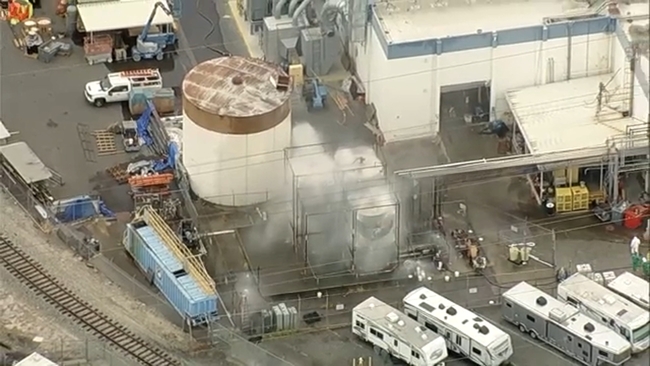
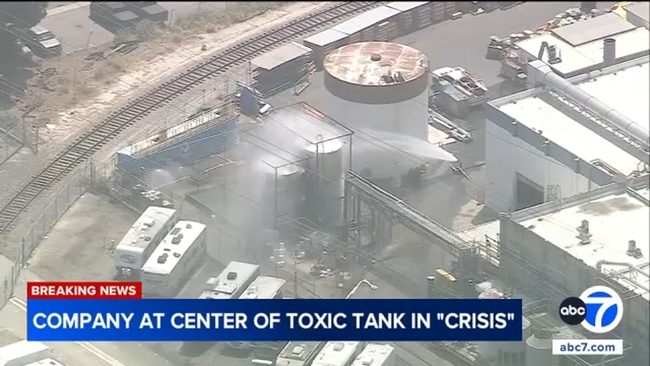
In an update Friday evening, the Orange County Fire Authority said crews have been able to maintain the temperature of the toxic chemical tank in crisis at GKN Aerospace, buying them some time to come up with a creative solution.
For now, the two options on the table are a tank explosion or a spill of nearly 7,000 gallons of a toxic chemical used to make plastics.
"The positive news is we have been able to keep the tank temperature maintained," OCFA Division Chief Craig Covey said in an update on Friday evening. "The problem one that's in crisis and has been damaged, we've been continuing our water curtain on it, and our active monitoring has shown that the temperature of it has stabilized and is buying us time to continue to sort out: how do we fix this?"
He said the goal is not to let the tank spill or explode, but for now, it's going to require a creative solution. Water has been streamed on the tank for over 24 hours via unmanned hoses and an automatic sprinkler system.
"That was what we were handed: a leaking tank or a tank that blows up," Covey said at a news conference earlier Friday afternoon.
The incident at GKN Aerospace started around 3 p.m. on Thursday when one of the three tanks began releasing vapor.
OCFA helped cool it down, and evacuation orders were lifted. But this morning, officials issued an alarming update, saying a different tank was in crisis and there was nothing that could be done to stop it.
While authorities say the tank could spill out or explode, they say the most ideal option would be a spill.
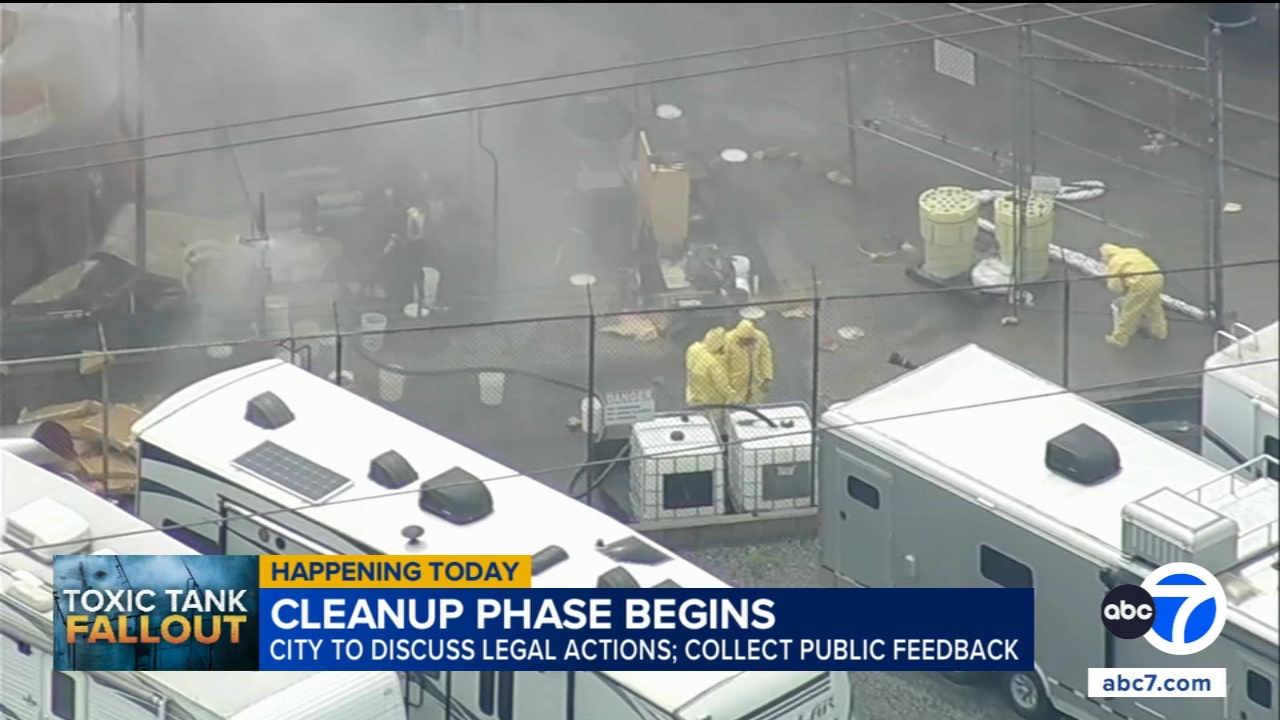
"Once it comes out, it is no longer an explosive hazard, and our hazmat teams in their chemical protective suits can go in, neutralize and mitigate the vapors that will be coming off of that," Covey said.
In the meantime, police have been working to evacuate 40,000 people in the evacuation zone.
"From a law enforcement and fire perspective, our highest priority is your safety and security. So please listen to what we are telling you," said Chief Amir El-Ferra with the Garden Grove Police Department. "We are experiencing about a 15% refusal rate."
The chemical in question is highly toxic and highly flammable, and the short and long-term health risks are serious.
"It can impact respiratory system, cause skin irritation, eye irritation," said OCFA Division Chief Nick Freeman. "The other concern we have is it's extremely flammable, and in its current state, very reactive and can cause that explosion."
OCFA says it is making calls to experts across the country, working to come up with a better solution. Specialists from the Orange County Health Department and the EPA are also working to make sure the established evacuation zone will account for a possible explosion plume.