Cause of Palisades Fire remains unknown 6 months after destructive blaze ignited


PACIFIC PALISADES, LOS ANGELES (KABC) -- It's been six months since the Palisades Fire ravaged the Pacific Palisades area of Los Angeles and the cause remains unknown.
ATF, the lead investigative agency for the Palisades Fire, also investigated the Lahaina Fire in Maui and took roughly one year to release its report. Still, those whose lives have been turned upside down want answers.
"Anyone who lives in California should want to know what caused this fire. Both the direct causes and indirect causes. So that we can take actions in the future to try and prevent or mitigate the risks," said Palisades resident Darrin Hurwitz, who lost his home in the fire.
The leading theory is that the January 7 fire was a re-ignition of an 8-acre brush fire, called the Lachman Fire, that burned six days prior during the early morning hours of New Year's Day. A satellite image shows the burn scar from that January 1 fire and the beginning of the massive Palisades Fire six days later. Residents and fire experts say the smoke from both fires came from a similar location, evidenced by two videos from UC San Diego cameras in the Santa Monica Mountains, first obtained by the San Francisco Chronicle.
Hurwitz was hiking the Temescal Ridge Trail the morning of January 7 when he came across the burn scar from the Lachman Fire.
"As I got up on Temescal Ridge, I realized this was not a normal morning. It was the strongest winds I had encountered up on the trail. I smelled what smelled like a relatively fresh scent of smoke. And I figured, given the extreme weather that day, it was most likely that was smoke coming from another fire that morning," said Hurwitz.
A mountain biker who lives in the area shared a video with Eyewitness News of the Lachman Fire burn scar, shot the morning of January 7, one hour before the Palisades Fire ignited, just as the winds were starting to pick up.
The Lachman Fire started along the Skull Rock trailhead in the Palisades Highlands. Investigators have focused their efforts on this area, evidenced by the perimeter that's still up. Experts say that the winds were strong enough on January 7 to uncover a hotspot that was still smoldering.
"That can happen up to months later if there's heavy timber involved and fire that's buried itself in the heavy timber that's down or even underground in the root systems of large timber," said Ed Nordskog, a former arson investigator with the L.A. County Sheriff's Department.
Eyewitness News has put in numerous requests to the Los Angeles Fire Department for details on the Lachman Fire, but LAFD has deferred to the ATF, which is handling the Palisades Fire investigation, saying in part, "the Lachman Fire is part of that ongoing investigation. As this remains an active federal investigation, the Los Angeles Fire Department will not be commenting at this time."
"Did LAFD actually investigate that first fire before the second fire. That is a great question. I have not heard them say anything about that yet and that says volumes to me. Did they send a qualified, competent fire scene investigator to the first fire before the second one?" said Nordskog.
Nordskog says fire departments typically mop up brush fires for days using infrared cameras that detect hidden hotspots.
"Some agencies have them on helicopters so it's easy to fly them over the scene, some are handheld. They have to physically turn over the soil and then add water. Just using water from a helicopter is not enough," said Nordskog.
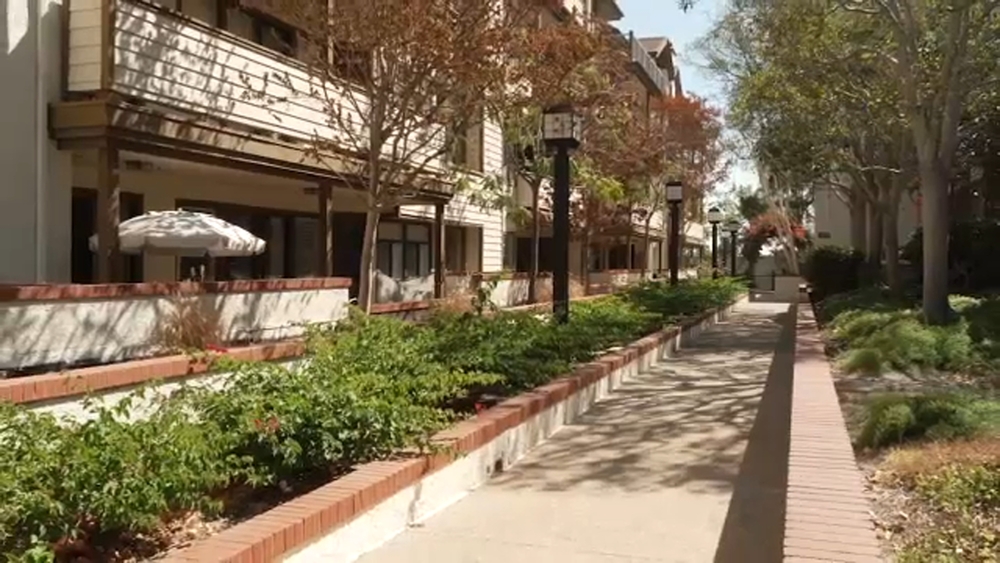
"We were in our typical walk around the neighborhood walking down this sidewalk. A car driving by seemed a little panicky, stopped and asked if there was another fire, pointed up the hill. We turned around and we saw the peak right there, that little hillside, engulfed in black and orange smoke," said Alan Feld, another hiker who was hiking to Skull Rock with his friend the morning of January 7, as he has for 22 years.
Feld made one of the first 911 calls to report the Palisades Fire. Feld isn't convinced the Palisades Fire was a re-ignition of the January 1 fire.
"It could have been a rogue ember. All I know is that the location where we first saw the fire was quite a distance from the January 1st fire. So it would have had to blow pretty far," said Feld.
All Palisades Fire victims can do is wait.
"Until the investigation is complete, we just don't know," said Hurwitz.