Estrogen patch shortage persists as demand for menopause treatment rises, doctors say


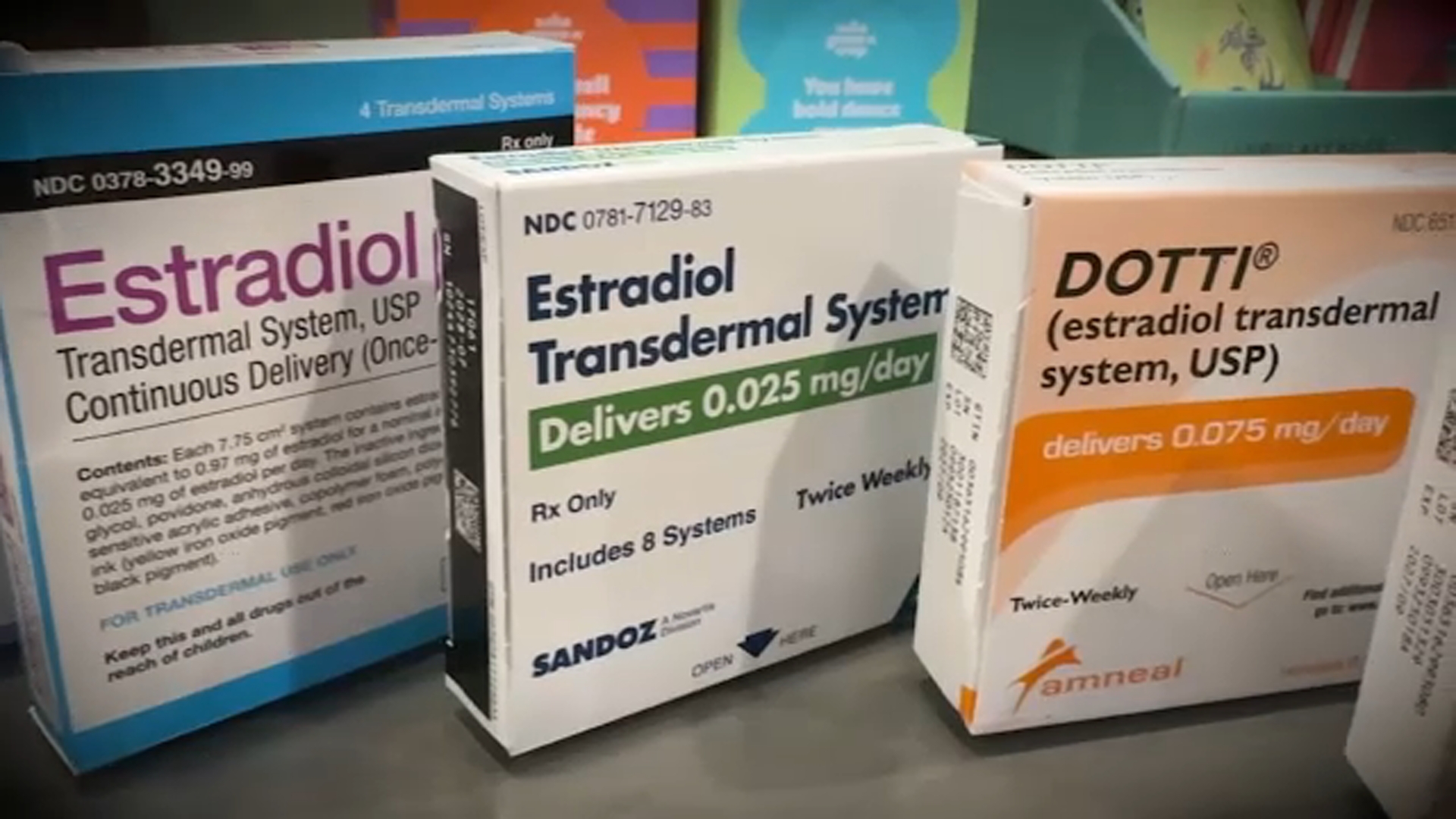
Estrogen patches are in short supply as demand for the menopause treatment continues to climb, leaving many patients searching multiple pharmacies for their prescriptions.
"It has jumped astronomically, the number of prescriptions," said family medicine specialist Dr. Manali Shendrikar of Providence St. John's Health Center in Santa Monica.
According to Shenrikar, pharmacies have struggled to keep various brands of estrogen patches in stock.
"The supply is down and the demand is very high. So now we have women calling multiple pharmacies to try to find their medication," she said.
Shendrikar said interest in hormone replacement therapy began increasing after the U.S. Food and Drug Administration removed the black box warning from estrogen replacement medications in late 2025. She said concerns stemming from landmark studies conducted two decades earlier had led many women to avoid the treatment.
"The evidence at that time pointed towards deep vein thrombosis, clots and cancer risk. Everyone was so frightened of them," said Shendrikar.
More recent findings indicate that benefits such as relief from hot flashes and protection against bone loss outweigh the risks for many women entering menopause, Shendrikar said.
A study by Epic Research found hormone therapy use nearly doubled, increasing from 1.7% in Jan. 2017 to 3.6% in April 2026.
Shendrikar said estrogen patches have become a popular option because the method of delivery reduces the risk of some potential side effects associated with oral medications.
"Lots of things that were happening with oral estrogens has decreased when you're on the patch," she said.
With the shortage expected to continue, Shendrikar said physicians and patients have had to consider alternative approaches when patches are unavailable.
Top Stories

"Now we're reverting to sometimes giving them double the dose and having them cut them in half, which is not the preferable way of doing it. You can use Divigel or other types of estradiol gel or use compounded gels. That's also an option and then there's a spray. I mean, there are a couple of things that are out there as well," she said.
Until supplies improve, Shendrikar encouraged patients to discuss alternatives with their doctors.
She also noted that newer medications, including Veozah and Lynkuet, may help treat menopausal symptoms without the use of hormones.