Florida woman speaks out after her C-section was disputed in court hearing
Cherise Doyley said she was forced to have the procedure against her will.

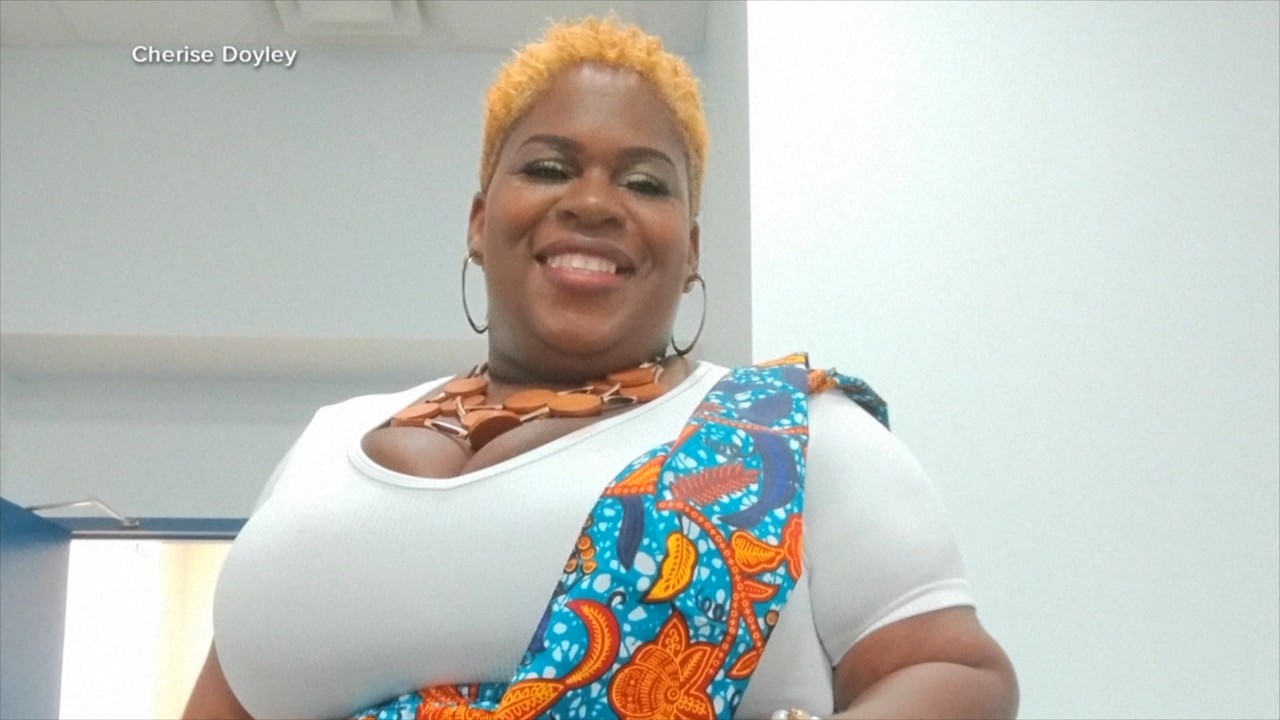
She was in her 12th hour of active labor in the hospital when Cherise Doyley suddenly found herself in front of a Florida judge from her hospital bed.
A nurse wheeled in a tablet with a judge, doctors, lawyers, and others on a Zoom court hearing.
"That was exactly when I found out that we were going to court," Doyley told ABC News in an interview. "I was so afraid. I was confused. I did not know what was going on or what to expect."
It was a Sunday afternoon, Sept. 8, 2024. The State of Florida -- at the behest of the University of Florida Health Hospital in Jacksonville -- was asking for an emergency hearing because Doyley, who had 3 previous cesarean sections (C-sections) was refusing another.
Doctors testified to the risks of delivering a baby by labor alone after her three C-sections, saying it could be deadly, including a higher chance of uterine rupture. They recommended a C-section before the birth became an emergency, stating the baby's heart already showed some signs of distress.
But Doyley -- a mom of three -- argued she would accept the risk of uterine rupture as opposed to other risks like infection from a C-section, and didn't want to undergo another one unless it was an emergency.
"It was a very hard recovery for me every single time," Doyley told ABC News. "And it was something that I just didn't want to go through again."
Doyley, who is an experienced doula -- a birth support person -- said she understood the risks and wanted to continue the labor, but the state argued that the life of the baby should have been paramount.
"The state's compelling interest is preservation of the life of the unborn child that may be harmed based on the mother's refusal to have this C-section," Nicholas Salatino, then-Florida assistant state attorney, said during the court hearing.
In between contractions, Doyley, a Black woman, suggested that discrimination was at the heart of the hearing, which she said violated her rights to make medical decisions for herself. In the three-hour hearing, she repeatedly asked for a lawyer or a patient advocate.
"I have 20 white people against me," Doyley said during the court proceeding. "I have not had a chance to be able to consult my own legal representation, and I'm trying to understand how you are taking my rights away as a patient."
The judge told Doyley that there was no constitutional right to counsel due to the nature of the emergency proceeding, leaving Doyley to argue her own case. She asked another doula to help advocate for her at one point.



In a statement to ABC News, the Florida state attorney's office said their office "does not make medical decisions - we ensured the court was presented with the facts so a judge could make his determination under the law."
The Fourth Judicial Circuit Courts of Florida told ABC News that their "position is that the substance of the hearing speaks for itself."
The hospital declined to comment on Doyley's allegations, including allegations of discrimination, due to what they said were Health Insurance Portability and Accountability Act (HIPAA) law restrictions.
"We don't often see courts intervene in the case of medical care for individuals," said Channa Lloyd, a legal analyst for ABC News. "We are seeing this happen more because as fetal rights are expanded, there can be a contradiction between the hospital trying to protect itself from liability, the mother and what she chooses as her birth plan, and what they see as the proper and best choice for the fetus."
According to a ProPublica investigation, at least one other similar case -- also involving a woman of color -- had happened a year earlier at another Florida hospital.
"Although the judge said that race did not play a factor, we know statistically nationwide, a lot of African American women statistically suffer more and have these decisions made more on their behalf than Caucasian women," Lloyd told ABC News in an interview.
According to the Centers for Disease Control (CDC), 30% of Black women say they felt discrimination during maternity care, with many saying they felt providers ignored or refused requests for help. Black women are three times more likely to die during or shortly after pregnancy than white mothers, according to the CDC. This disparity is independent of how much money the mom has or her education.
Ultimately, the judge ruled Doyley could continue with labor, but if the situation became an emergency, the hospital could proceed with a C-section.
"I am granting the petition for finding that the state's compelling state interest is met," Judge Michael Kalil said during the hearing. He later ordered he was "not requiring anything except for in an emergency basis."
On Sept. 9, 2024, at 2:00 a.m., with the baby's heart rate dropping for at least seven minutes -- a sign the baby's life was in danger -- Doyley was given a C-section.
Her daughter, Arewa, is a healthy 1-year-old a year later, but her mother can't forget how the birth was handled. "This was the most dehumanizing, scary experience, traumatic experience I've ever been in, in my life," Doyley said in an interview with ABC News.