Volunteers fan out across parts of Los Angeles for first night of 2026 homeless count

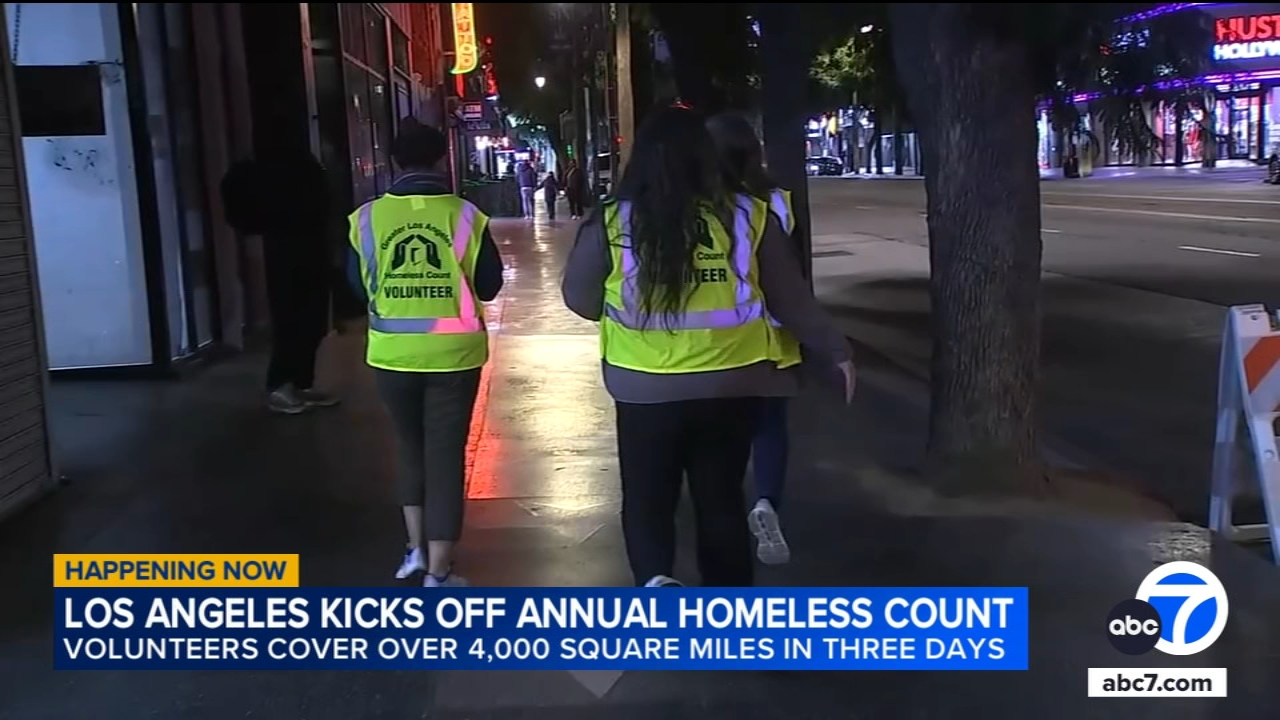
LOS ANGELES (KABC) -- Volunteers fanned out across the San Fernando Valley and metro Los Angeles area Tuesday night to begin the annual three-night Greater Los Angeles Homeless Count.
The tally provides a point-in-time snapshot of homelessness throughout the L.A. Continuum of Care -- which covers most of the region except the cities of Long Beach, Pasadena and Glendale, which will conduct their respective counts.
The annual count also helps get a snapshot of local needs and where to direct resources.
The Los Angeles Homeless Services Authority (LAHSA) is expected to release the results in late spring or early summer.
After two consecutive years of decreases, officials fear the numbers may skyrocket due to cuts in funding. Adding to the concern are audits that found deficiencies in LAHSA's oversight of taxpayer money and performance outcomes.
In response, L.A. County launched a new homelessness department to unite county and city agencies and better use funding.
"Accountability is alive and well as it relates to how this county is going to do work toward ending the homeless crisis," L.A. County Supervisor Kathryn Barger said.
As L.A. continues its contract with LAHSA, city leaders say the homeless crisis can only be solved if the city and county work together.
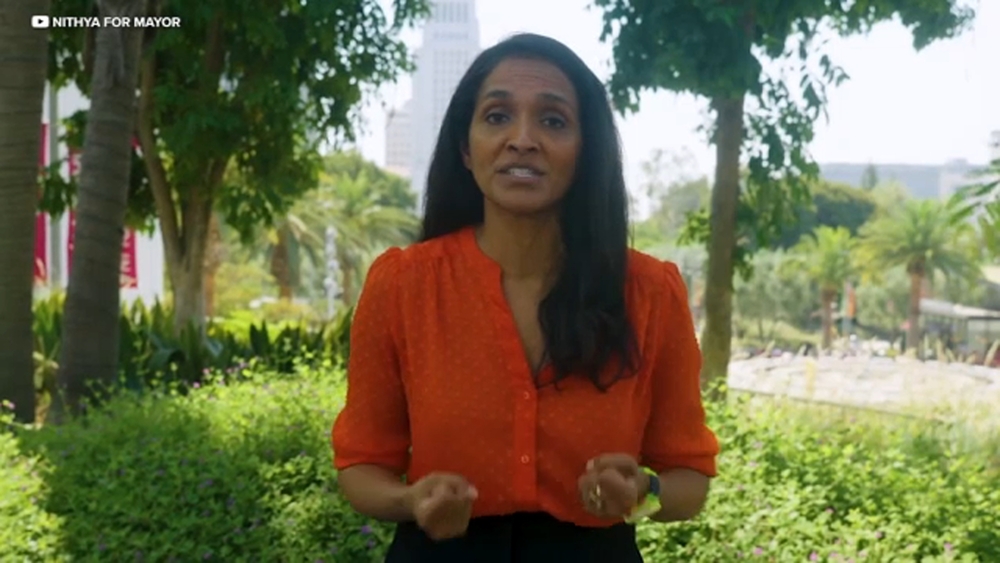
"I think we will have to work through some of the challenges that we're facing in the gaps that exist between the city and county right now because there is no future to resolving homelessness without the city and county working in partnership," L.A. City Councilmember Nithya Raman said.
Last year, the point-in-time count was delayed because of the January wildfires.
LAHSA says homelessness fell 4% across L.A. County in 2025. Unsheltered homelessness dropped nearly 10% in the county and 7.9% in L.A. city.
Volunteers in the San Gabriel Valley and East Los Angeles will count on Wednesday. The count will wrap up Thursday in the Antelope Valley, West and South Los Angeles, and the South Bay/Harbor region.
Ahead of the count, LAHSA officials said they enacted several improvements for the operation.
The homelessness agency will be using an app-based data collection process for the fourth year in a row and improved maps, assigning more staff to provide technical support and help with supply distribution at deployment sites, and to ensure volunteers collect their materials to get the count done quickly and efficiently.
LAHSA also simplified training materials to improve the volunteer experience and ensure consistency across L.A. County.
The agency is coordinating with the county's Department of Health Services and Emergency Centralized Response Center for additional staff support. This improvement is expected to aid in "special consideration" census tracts and areas, and more rugged locations such as basins, creeks and deserts that are too dangerous, hard-to-reach or inaccessible for community volunteers.
Lastly, the processes for the Housing Inventory (sheltered) and Youth counts have been overhauled to improve response rates and generate bigger samples.
The Youth Count will be conducted over nine additional days for those aged 10 to 19. In a similar fashion, the Housing Inventory Count will begin earlier to optimize data review and make it easier to validate responses.
City News Service contributed to this report.