Anti-vaccine sentiment spilling over into veterinary care as pet vaccine skepticism grows, vets say
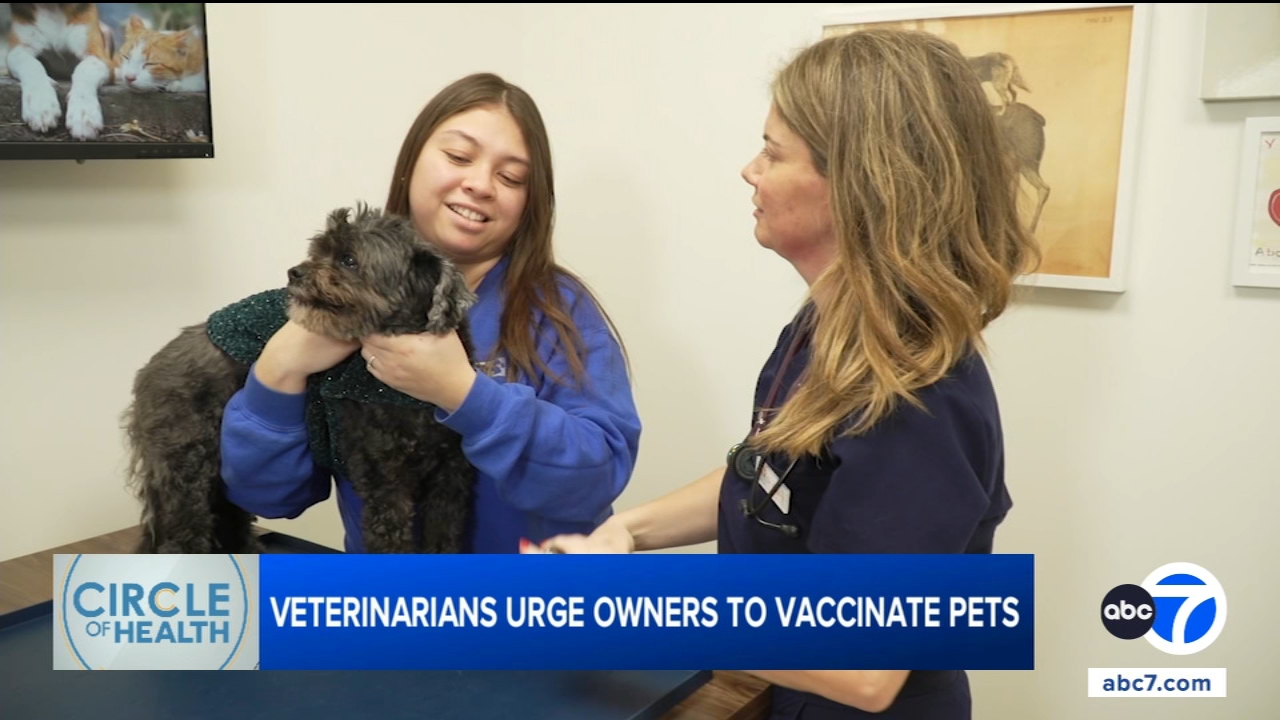


LOS ANGELES (KABC) -- Veterinarians say they are seeing a drop-off in pet vaccination as some pet owners are skeptical of shots.
But the shots don't just protect pets, they protect people because animals can pass diseases on to humans.
Twelve-year-old Chi-Chi Larue is one of the many dogs ready for adoption at the Amanda Foundation. Here, every animal is up-to-date on their vaccines.
"I tell people, I say, you have to look at your puppies and kittens like you look at baby brothers and sisters. They need those vaccines in order to be healthy," said Teri Austin, president of the Amanda Foundation.
The group has been offering pet vaccine services for decades, but lately she's been running into some pet owners who've become skeptical of shots.
Vaccine hesitancy similar to what many people expressed during the pandemic.
"We do have some blowback about that," she said.
A journal "Vaccine" study found nearly half of dog owners are hesitant to vaccinate their pets.
But these shots are more than just about keeping your furry friends healthy. Animals can pass diseases to humans.
The core vaccines for pets include rabies, distemper, parvovirus and canine Hepatitis.
Other non-core vaccines are for things like flu or kennel cough and may be required for grooming or daycare.
One study found the rabies vaccine prevented nearly 300 dogs from being infected in a year.
"It is almost 100% fatal in humans. So that is something we do not mess around with," said Ariana Pereira, doctor of veterinary medicine with the 4 Paws Animal Clinic.
Austin said after years of offering pet vaccines in South L.A., Highland Park, Echo park and Pacoima, L.A. County's Vector Control reported animal cases of distemper, parvovirus and hepatitis have dropped in those areas.
"These are life-saving vaccines, and they're the way you can keep your pet to 12, 14, 15, 16 years old," said Austin.
While many owners are concerned about side effects, research shows they are extremely rare affecting only about 0.2% of dogs.
"We typically have our clients look out for vomiting, diarrhea, facial swelling or difficulty breathing. Those are going to be the main ones that you'll see," said Pereira.
Many pet owners tell Austin that the cost of vaccines is a barrier. Her advice is to take advantage of free or low cost vaccine clinics.
"Most veterinarians and pet stores have days that they have a vaccine clinic where they have reduced fees. So do organizations like spcaLA. If someone loves their creature and they bond with them, they can usually find a way to make it work," said Austin.