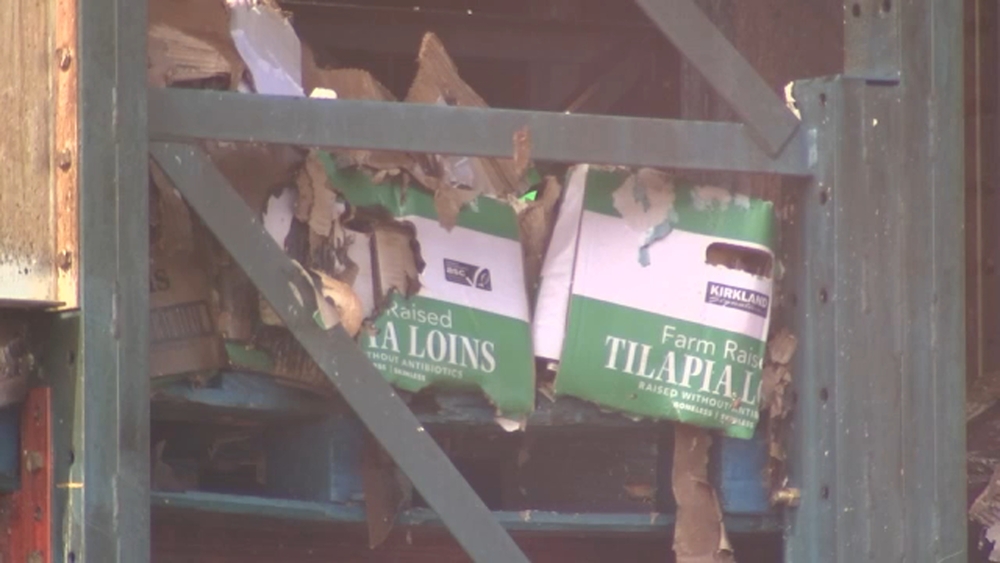
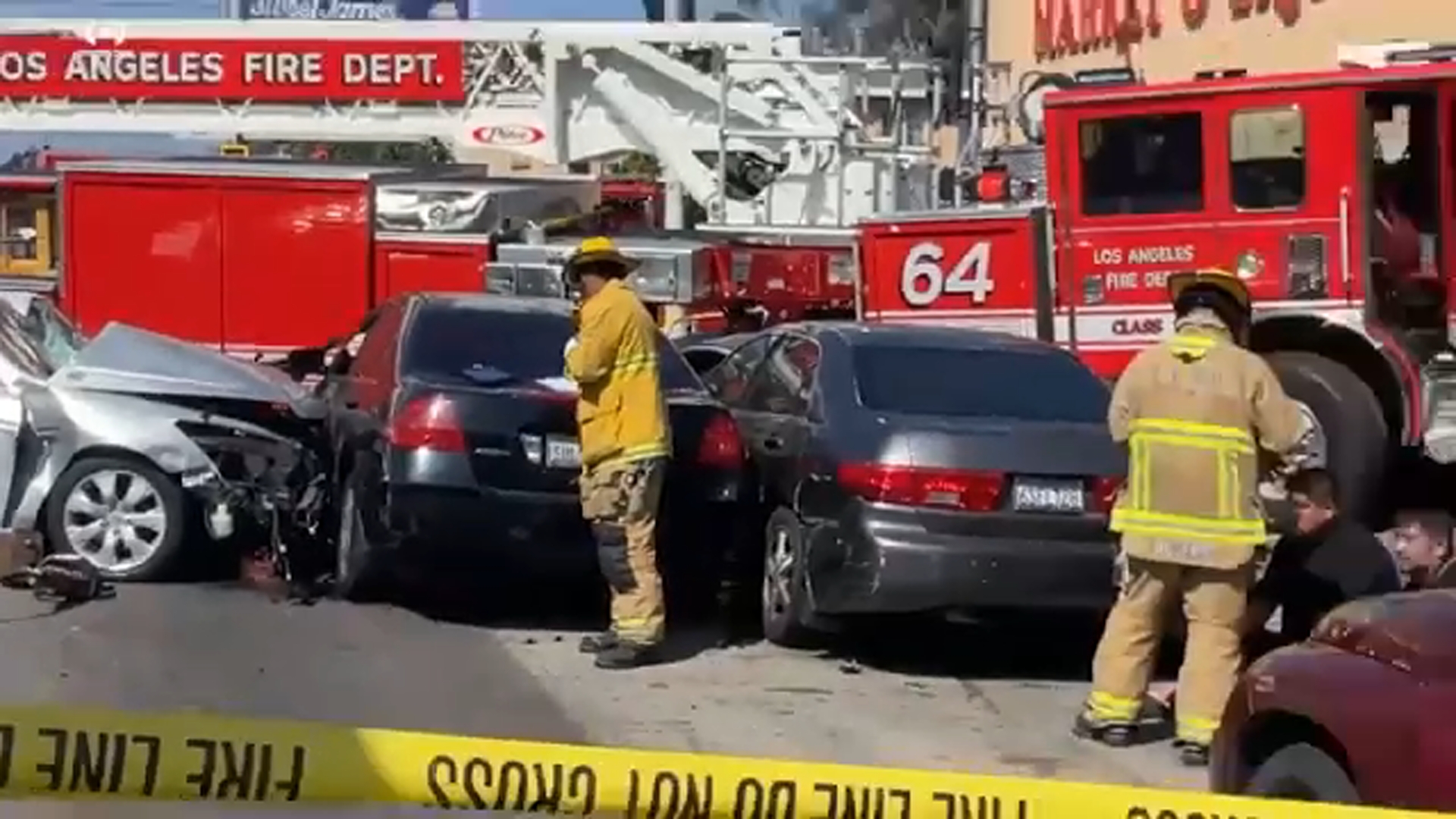
Ask ABC7: Your Boyle Heights warehouse fire questions answered
We're getting answers to your big questions about the Lineage warehouse fire.

BOYLE HEIGHTS, LOS ANGELES (KABC) -- It's been a week since a massive warehouse fire left many across LA with questions about the fire's impacts.
As firefighters battle flare-ups at the Lineage cold storage facility in Boyle Heights, ABC7 is getting you answers to your concerns.
Submit your question to Ask ABC7 here
Air Quality Concerns
Q: How can I check the air quality in my community?
- Roberta C., Shadow Hills, and Connie Y., Ontario
ABC7: Tuesday, 7 on Your Side's Kevin Ozebek showed viewers how to check the air quality in your area.
Click here for the AirNow Fire and Smoke Map website, then maneuver to your neighborhood and click on the sensor for air quality readings in your area.
Q: I stay near the Lineage fire. Where can I call or email to receive an air purifier for my home? - Vanessa, Boyle Heights
ABC7: Click here for Los Angeles city resources on how to obtain air purifiers. You can find the information by scrolling down about a quarter of the page.
Additionally, you can fill out this CD14 request form for purifier assistance.
Q: The wind has been blowing the smoke and pollutants into my neighborhood, and now we're experiencing health problems. Can LA County residents receive air purifiers, too?
- Maria F., Hacienda Heights, and Sylvia L., San Gabriel
ABC7: Supervisor Hilda Solis's office tells ABC7 they are distributing air purifiers at the church in Union Pacific, and occasionally at City Terrace Park. They are coordinating with 2-1-1, and you can visit LA County's website for additional information.
Q: My husband and I have tickets to the USA vs Türkiye game on Thursday the 25th at SoFi Stadium. Is there a possibility the air quality could be affected in that area by the ongoing fire in Boyle Heights? Should we bring masks?
- Lisa R., Fullerton
ABC7: Before heading to the game, check local air quality readings and forecasts. If air quality levels are elevated, or if you are sensitive to smoke, wearing a well-fitting N95 mask can help.
Click here for the AirNow Fire and Smoke Map website, then maneuver to SoFi Stadium and click on the sensor for air quality readings in Inglewood.
Health Impacts
Q: What will happen to the water runoff that's flowing off the building?
ABC7: There are three containment booms located along the L.A. River to catch the debris.
L.A. County contracted with the company Ocean Blue to strain out and catch fire debris, such as charred insulation, metals and foam materials.
One boom is located just south of the fire. There's another in South Gate and in Long Beach.
As for the level of toxic chemicals that have made it into the water, that's not known at this point. Results from water testing haven't come back yet.
What we do know is that workers on June 22 found dead fish in the Dominguez Channel wetlands in Long Beach.
Kerjon Lee, a spokesperson for L.A. County Public Works, said water sampling results are expected soon. Once those results are available, the county will coordinate with multiple agencies, including the California Department of Fish and Wildlife and the Regional Water Quality Control Board.

The findings will help determine the next phase of the cleanup effort.
Q: What are the long-term health impacts to our lungs and hearts from PM2.5 particulate that experts and city officials are talking about? - Yoshi
ABC7: We spoke with a pulmonologist who explained that PM2.5 particles are extremely small and can penetrate deep into the lungs. Long-term and repeated exposure to elevated levels of PM2.5 is associated with increased risks of asthma, COPD, heart disease, stroke, lung cancer, and premature death.
However, in the context of a single event lasting several days, most healthy individuals are not expected to experience permanent lung or heart damage.
The greatest health concerns arise from cumulative exposure over time.
Those most at risk include individuals with asthma, COPD, or heart disease, as well as older adults, pregnant women, and young children. While some people may experience lingering symptoms, most will recover once smoke exposure ends.
The doctor encourages anyone with persistent or worsening symptoms to seek medical care.
Q: Is it possible to have food poisoning-like symptoms from all of the rotting food particles in the air? - Bianca P., Los Angeles
ABC7: We asked a pulmonologist, and he said no, that would be very unlikely. You would have to actually ingest the rotting food to have food poisoning.
Fighting the Fire
Q: Why can't other fire departments come from nearby cities and assist? - Jenn, East LA
ABC7: LAFD is working with partner agencies outside the city. This mutual aid support is one of the reasons a state of emergency was declared, allowing additional resources and assistance to be mobilized.
Q: Would foam used in airplane fires be a better option for extinguishing the Lineage fire? If so, why aren't they using it? - Jenn, Long Beach, and James B., Fontana
ABC7: According to LAFD, the foam used at the airport is designed for flammable liquid fires. In this case, that is not the situation.
The challenge is not about smothering the fire, but rather getting water approximately 350 feet into the structure.
Firefighters are also facing additional difficulties due to interior racks that are not removable and extend the full height of the building.
At this time, the cause of the fire has yet to be determined.
Personal Impacts
Q: Why do City of Los Angeles employees have to report to work? They can work from home. I have a few family members and friends that are working and are complaining of the air and headaches. Boyle Heights is right down the street. - Debbie, San Diego
ABC7: Mayor Bass's office said City of Los Angeles employees may work remotely during emergencies, when appropriate. Departments have flexibility to make those determinations based on operational needs and the type of response required.
In situations such as the Boyle Heights warehouse fire, many city employees are considered essential personnel and are needed on-site or in the field to support emergency operations, coordinate services, ensure public safety, and assist impacted communities in real time.
Other employees may be approved to work remotely, depending on their role and the needs of their department.
Ultimately, each department determines staffing needs during an emergency, based on how best to serve residents while also considering the circumstances of individual employees.
Have a question our team can help with? Submit it here, and someone on our team will try to get information for you.