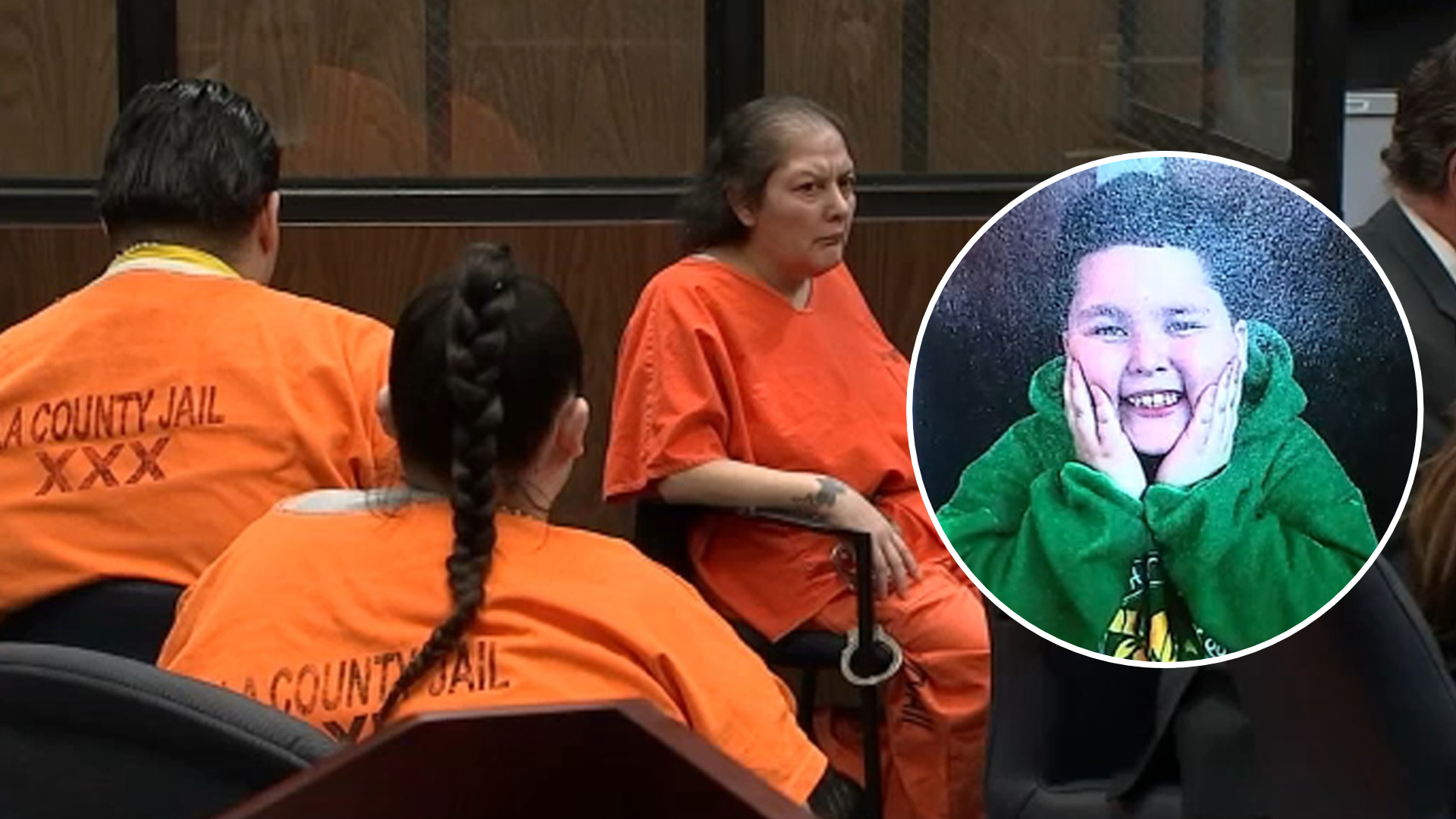
ABC7 gets inside look at LAPD's elite Robbery-Homicide Division as it confronts new challenges
Eyewitness News sat down with Capt. Scot Williams, the leader of the detectives on the most high-profile criminal cases in L.A.


LOS ANGELES (KABC) -- The Manson Family murders, the Nightstalker serial killings, the OJ Simpson case, and, more recently, the murder case involving the singer D4vd and teenager Celeste Rivas Hernandez were all investigated by the Los Angeles Police Department's elite Robbery-Homicide Division.
From celebrity murders to high-dollar heists, the Robbery-Homicide Division has worked L.A.'s most notorious cases since its founding.
For insights into how L.A.'s best detectives try to crack cases, their captain sat down with ABC7 Investigative Reporter Kevin Ozebek.
As the unit confronts new pressures, from shrinking budgets to criminals using artificial intelligence, Capt. Scot Williams says the mission remains unchanged: pursue justice in the city's most complex and high-profile cases.
On June 5, 1968, Robert F. Kennedy was shot in Los Angeles. As one of America's beloved politicians was taking his last breaths, the pressure was on LAPD to help track down the killer.
"Over the course of the year of that investigation or so, the department recognized the need to have a group of specialized, very good detectives that were available to handle some of these high-profile incidents," Williams said.
That's how LAPD's storied Robbery-Homicide Division was born.
"We try very, very hard not to be checkbox detectives here. Every case presents something different," Williams said.
Williams is a second-generation LAPD officer who deeply knows the history of the division he has run for the past three years.
"The investigators that walk these halls need to understand where we came from," Williams said.
The very first case the unit was handed was the 1969 murders of Sharon Tate and four others, which RHD eventually connected to followers of Charles Manson.
The division's hallways now display reminders of those cases, along with others that shaped its identity.
One display highlights the conviction of LAPD Officer Stephanie Lazarus, who denied involvement in the 1986 killing of her ex-boyfriend's new partner. Despite her denial, detectives determined she was responsible.
"All we're focused on is justice, and if that involves putting handcuffs on one of our own, so be it," Williams said of the case.
Other displays on the walls acknowledge low points and missteps for the division, like the acquittal of O.J. Simpson after evidence was mishandled.
"For all the successes that we've had, I think it's also important to acknowledge where you can do things better and learn from them, and that's why this is here," Williams said.

For Williams, one case stands above the rest: the 2004 murder of 12-year-old Gregory Gabriel.
"Never forget him... He was from a family of immigrants from Belize," he said.
Gabriel was shot outside an event hall while he was spending the night with a friend. Williams said the grief of Gabriel's mother, Ella Crawford, has stayed with him for more than two decades.
"How can I not do everything I can to bring justice to that woman? Ella Crawford, I'll never forget her. She was an amazing woman. But that was it. I mean, that was the sort of seminal moment of my career that really let me know why it is that we do what we do here," Williams said.
Williams ended up finding Greggory's killer.
Today, Williams hand-picks every detective on his team. He looks for those with the most tenacity and creativity inside LAPD. His detectives will need those traits as they tackle criminals armed with AI and a shrinking city budget.
The division is known for pioneering the use of DNA and, now, digital forensics.
"It's much, much harder to get away with murder now than it probably used to be," Williams said. "Because there's just so much data that everybody's spewing data every day, every minute."
When asked whether reduced funding threatens the division's edge, Williams said, "It does, of course it does."
But still, RHD continues to take on the city's high-profile cases. That includes the recent arrest of D4vd at a Hollywood Hills home. After his arrest, D4VD pleaded not guilty to murder and other charges as he awaits his next hearing.
"Our case criteria never changed, and the quality of the work that we did here never changed," Williams said.
Up until last year, RHD was down to a staff size of just about 70. That's about half the staff size it was a few years before that. But because of a major restructuring, RHD has now absorbed all of the homicide units across Los Angeles.