Lindsay Clancy jury sent home for the day due to 'unforeseen circumstance'


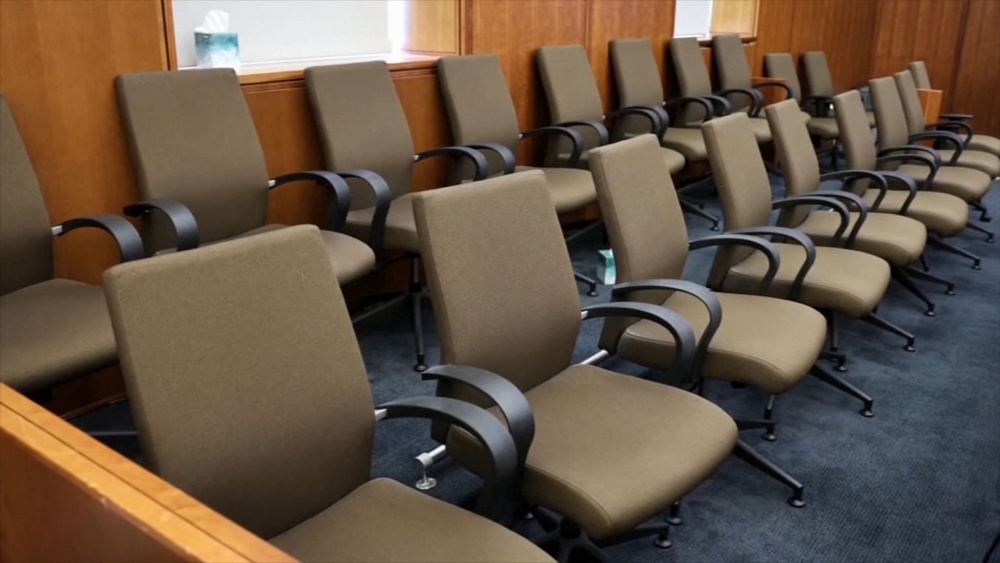
Jurors in the murder trial of Lindsay Clancy were sent home for the day on Wednesday afternoon due to what Judge William Sullivan described as an "unforeseen circumstance."
Testimony is scheduled to resume at 9 a.m. on Thursday. The judge did not indicate the cause of the delay.
"This is not something we saw coming, but you're not to speculate about what it is," Sullivan told jurors. "You're not to hold it against either side. It's just something that we have to deal with."
Defense lawyers began presenting their case to the jury this week and have so far called eight witnesses.
If you are experiencing suicidal, substance use or other mental health crises, please call or text the new three-digit code at 988. You will reach a trained crisis counselor for free, 24 hours a day, seven days a week. You can also go to 988lifeline.org or dial the current toll free number 800-273-8255 [TALK].
Psychologist details Clancy's intrusive thoughts leading up to the killings
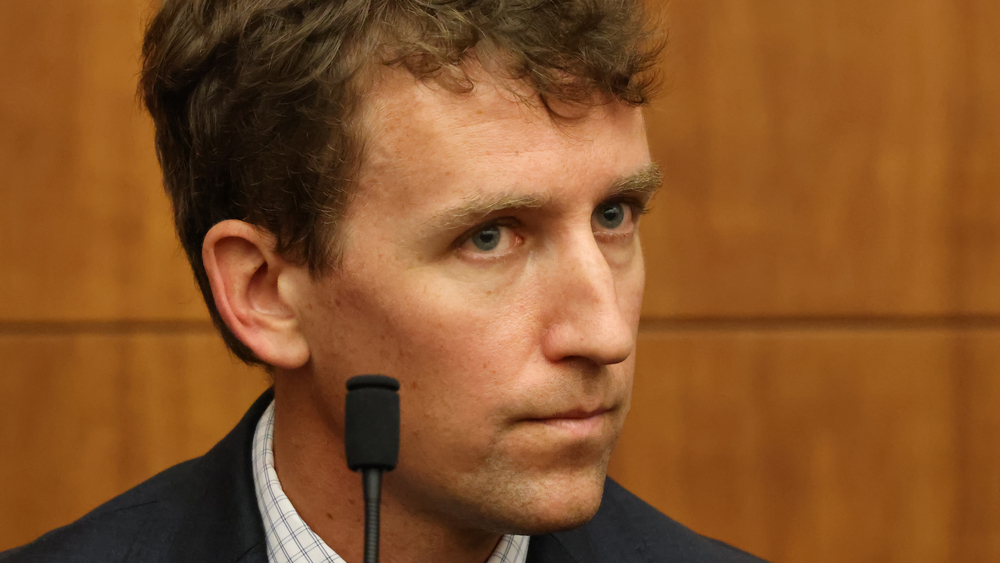
Earlier Wednesday, a forensic psychologist who has met with Lindsay Clancy approximately 60 times over the last three years returned to the witness stand, as defense attorney Kevin Reddington sought to prove that an episode of postpartum psychosis led Clancy to kill her three children in January 2023.
Clancy is facing three counts of first-degree murder for the deaths of her 5-year-old daughter Cora, 3-year-old son Dawson, and infant son Callan at her family's home in the Boston suburb of Duxbury on Jan. 24, 2023. She has pleaded not guilty.
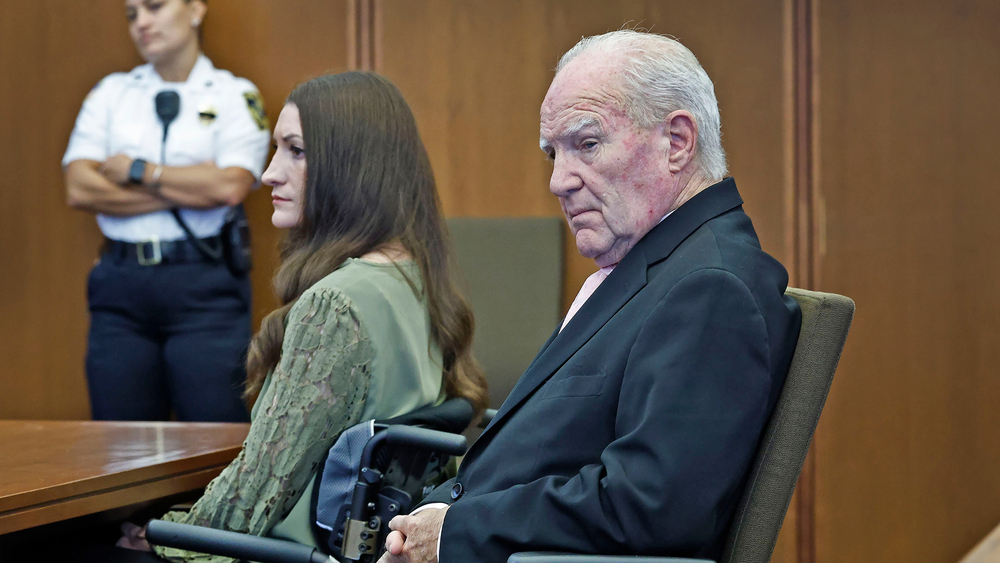
Reddington has argued that Clancy was suffering from postpartum psychosis when she strangled her three children and attempted to take her own life. Defense lawyers do not contest that Clancy was responsible for the deaths of her three children. Instead, they argue she should not be held criminally responsible for their deaths because she was suffering from postpartum psychosis at the time.
In his testimony on Wednesday, clinical and forensic psychologist Paul Zeizel walked jurors through the downward spiral the 36-year-old claimed she experienced in the months prior to the killings, based on his opinion and a review of her medical files.
In late 2022, Zeizel testified Clancy began experiencing "derealization" -- a sense of detachment from one's surroundings, according to the National Center for Biotechnology Information -- as well as symptoms of psychosis, adding that she grew concerned that others could hear her thoughts.
"Her concern was that when people could hear her thoughts, her children would be removed from her care," Zeizel said during direct examination.
Zeizel, who did not treat Clancy prior to the killings, testified that Clancy's intrusive thoughts eventually became unrelenting. By January 2023, Zeizel told jurors Clancy could barely get through her day, based on his review of her medical files from other providers. Zeizel said that in his assessment, Clancy was suffering from "bipolar disorder with postpartum psychosis."
"She wasn't just having everyday thoughts that we all have, reminding ourselves to do something, which we make note of and then we move on," he said. "Intrusive thoughts are unrelenting. They don't stop. They're what we call ego dystonic -- you don't want them. They keep interfering with your ability to get through the day."
Zeizel said Clancy's intrusive thoughts "were getting worse, and they were telling her to kill herself."
By Jan. 24, 2023 -- the day Clancy killed her three children -- she could no longer determine right from wrong, he testified.
"She was unable to conform her behaviors to the rule of law, and she had no appreciation for the wrongfulness of her act," he testified.
Psychologist testifies about Clancy's phone call to her ex-husband following killings
Zeizel previously offered key testimony in Clancy's defense on Tuesday, describing a phone call he facilitated for Clancy to her then-husband Patrick Clancy about two weeks after the killings.
Zeizel said he first met with Lindsay Clancy on Feb. 4, 2023 -- 11 days after she killed her children -- to help evaluate her. He testified that Clancy, then handcuffed to a bed in a hospital room guarded by armed officers, remembered what had happened and requested to speak with her husband.
"She wanted to know how he was doing. She wanted to know if she could call him and find out where things are with her and with him, and how he was faring, and to just speak with him," he testified.
Zeizel testified that he tried to facilitate a call over speaker phone, but Patrick Clancy did not pick up. Two days later, they tried again, he said.
According to Zeizel, during the second call, also made over speaker phone, Lindsay Clancy told her husband "she loved him very much."
"She was unable to express a lot of emotion, but she expressed love for him, and she had said that she heard a male voice ordering her, telling her that she didn't have any choice, but she had to kill her children and then kill herself," he told jurors.
Zeizel testified that he has met with Clancy approximately 60 times since then, including during her trial. He testified that her extensive medical records showed Clancy's symptoms, such as brain fog and disassociation, appeared genuine and said "she was not faking."
Zeizel also argued that Clancy's medications seemed to have worsened her condition, adding that the symptoms of psychosis vary from day to day.



Jurors previously heard testimony about how Clancy was prescribed 13 different psychiatric medications in the four months before she killed her children.
"People with psychosis have intermittent symptoms," Zeizel testified Tuesday. "They can function fine one day, and the next day they can be hearing voices."
He added, "Hallucinations are like the waves at the beach: They come, go, they come and go."
Psychologist testifies Clancy's medical records did not indicate she was hearing voices
According to Zeizel, the last time Clancy claims she heard a voice in her head was on Jan. 24, 2023, the day she killed her three children.
"Currently, she has not heard voices since the event took place in 2023," Zeizel testified Wednesday.
Zeizel also said in his testimony that Clancy's medical records prior to the incident did not reflect she was hearing a voice in her head, though she did report intrusive thoughts.
Prosecutors have attempted to cast doubt on Clancy's claim that she heard a male voice in her head telling her to kill her children and take her own life prior to the killings.
According to Reddington, prosecutors have also suggested that Zeizel planted the idea Clancy heard a voice telling her to kill her children during their first meeting, two days before she made a similar comment to her husband over the phone.
Reddington has sought to pre-emptively push back on that allegation, and an officer who stood guard outside Clancy's hospital room testified previously that there was no evidence Zeizel planted the idea.
Zeizel testified Wednesday that he learned about the voice Clancy claimed she was hearing -- beyond overhearing her phone call to her then-husband -- from a hospital chaplain.
"I spoke to other people, who I asked about the nature of their interactions with Miss Clancy," he told jurors. "It was not a fishing expedition."
Prosecutors also tried to suggest that Zeizel's assessment was impacted by confirmation bias because he was not only assessing Clancy for the sake of the trial but also treating her as a patient, meaning, they argued, that he might support his own theories about her health and overlook contradictory evidence.
On redirect, Zeizel testified, "Confirmation bias is coming up with a conclusion before you reach an opinion. It's in Latin as 'tabula rasa' -- a blank slate. You draw no conclusion. The conclusion finds you, and if you don't do that, you are at risk of having confirmation bias."
TikToker can't testify for the defense
A few weeks ago, Emily Thorndike - a Brooklyn woman with no connection to Lindsay Clancy - was watching the livestream of the trial and decided to post a TikTok about her thoughts on Clancy's medical treatment.
On Wednesday, she briefly addressed the courtroom - with no jury present - to share her experiences at one of the hospitals where Clancy was treated, as the judge in the case weighed allowing defense lawyers to call her as a witness.
Judge William Sullivan ultimately ruled against allowing the testimony.
The dispute stems from the testimony of ex-husband Patrick Clancy, who took the stand as the prosecution's first witness. During his testimony, prosecutors described Mclean Hospital - where Clancy did a four-day inpatient stay - as a premier medical institution that offered Clancy a slew of doctors, nurses, and programs to help patients like Clancy.
When Thorndike heard that description, he decided to post to TikTok to push back. Thorndike spent about seven years working as a social worker at the same hospital and unit where Clancy was treated, though she left the role about a year before Clancy was admitted.
"I was emotional because I felt like what was discussed in court was not aligned with what my experience was," Thorndike said about her lengthy TikTok.
After that post went viral, defense attorney Kevin Reddington tried to contact Thorndike as a potential witness, going as far as to hire a private investigator to track her down.
Outside of the presence of the jury, Thorndike answered questions from defense lawyers and prosecutors, arguing that there was limited access to doctors at McLean. She argued patients did not get individual therapy, that one doctor was assigned to 23 patients, and the programs included things like coloring and playing with clay.
"I felt it was misleading to indicate that there's sort of an in-depth doctor session when it's very brief," she said.
Judge William Sullivan found her testimony credible but said he would not allow the testimony because of its "limited materiality" to the case.
"I find this witness credible. I find that, and I appreciate her being willing to offer the information that she has, but that's not always the whole finding on this," he said.
He said that Reddington can submit records showing the staffing levels at McLean, but the jury would not directly hear from Thorndike.
PREVIOUS COVERAGE:
- Lindsay Clancy's former mother-in-law testifies in murder trial: 'She was begging for help'
- Mom and sister testify about Lindsay Clancy's declining mental state before she killed her children
- Patrick Clancy, father of slain kids, testifies as ex says postpartum psychosis drove killings
- 'She killed the kids!' 911 call from Lindsay Clancy's husband brings tears to the courtroom
- Jurors in Lindsay Clancy's trial visit the home where she killed her children
- Lindsay Clancy's diary chronicled desperation and 'brain fog' before she killed her 3 kids
- Nanny says Lindsay Clancy appeared to be a loving mother before killing her 3 children
- Toxicology expert testifies that drug levels were low in Clancy trial
- Defense lawyer takes aim at psychiatrist's care before Lindsay Clancy killed her 3 kids
- Investigator says Lindsay Clancy searched 'can you treat a sociopath'