Metrolink sees surge in ridership as soaring gas prices push SoCal commuters toward public transit


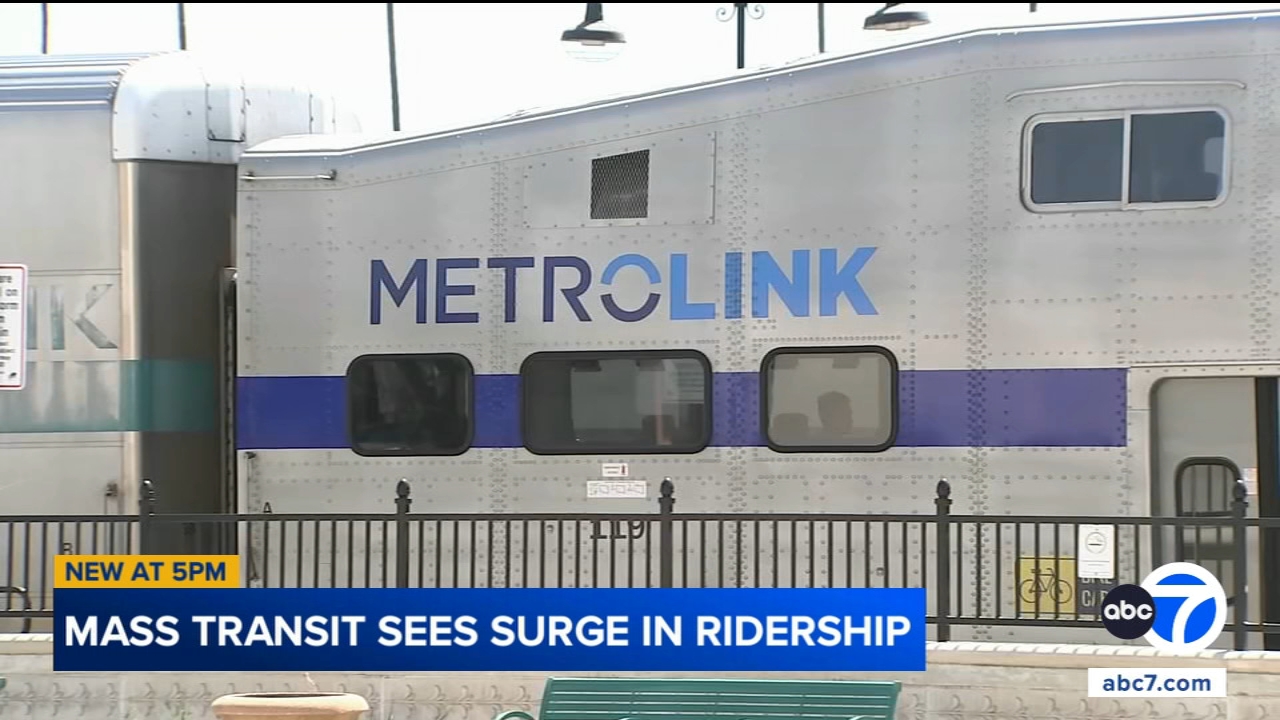
LOS ANGELES (KABC) -- With gas prices climbing past $6.20 per gallon in the Los Angeles area, more commuters are leaving their cars behind and turning to Metrolink and other mass transit for their daily trips.
Riders say the shift is noticeable.
"There's been a huge influx in the people on the trains," said Autumn Beno-Morris, who commutes to downtown Los Angeles by rail. She said driving is no longer financially realistic. "Right now there is no way I could afford to drive into the city every day. I commute over 70 miles each way and with the prices of gas, it's impossible for me to keep up with that."
Metrolink officials say they saw ridership rise almost immediately as fuel costs surged.
"There's a cost prohibitive nature to driving right now," said Meredith Yeoman, the agency's director of communications. According to Yeoman, Metrolink recorded a 4% jump in ridership when gas prices spiked. The L.A. County Metropolitan Transportation Authority also reported an increase, with March ridership up more than 8% compared with March 2024.
The trend aligns with the distance many riders travel. The average Metrolink passenger currently commutes 36 miles each way.
"You think about that in round-trip terms, at 72 miles in a day, the average car probably gets 25 miles to the gallon, so you're talking three gallons right there," Yeoman said.
At current prices, that daily round trip can cost drivers about $18 in fuel. By comparison, Metrolink offers a $15 day pass, with lower fares for riders traveling within the LA Zone. A Metrolink ticket also includes free transfers to any Metro bus or rail, easing concerns about the "last mile" of a commute.

For Beno-Morris, the benefits go beyond cost.
"On the trains especially I have the flexibility to work, check out if I want to watch a show, read a book. In my car, I'm literally stuck in the gridlock," she said.
As fuel prices remain high, transit officials expect more commuters to consider rail as a practical -- and less stressful -- alternative.