California's reservoirs surge after back-to-back storms


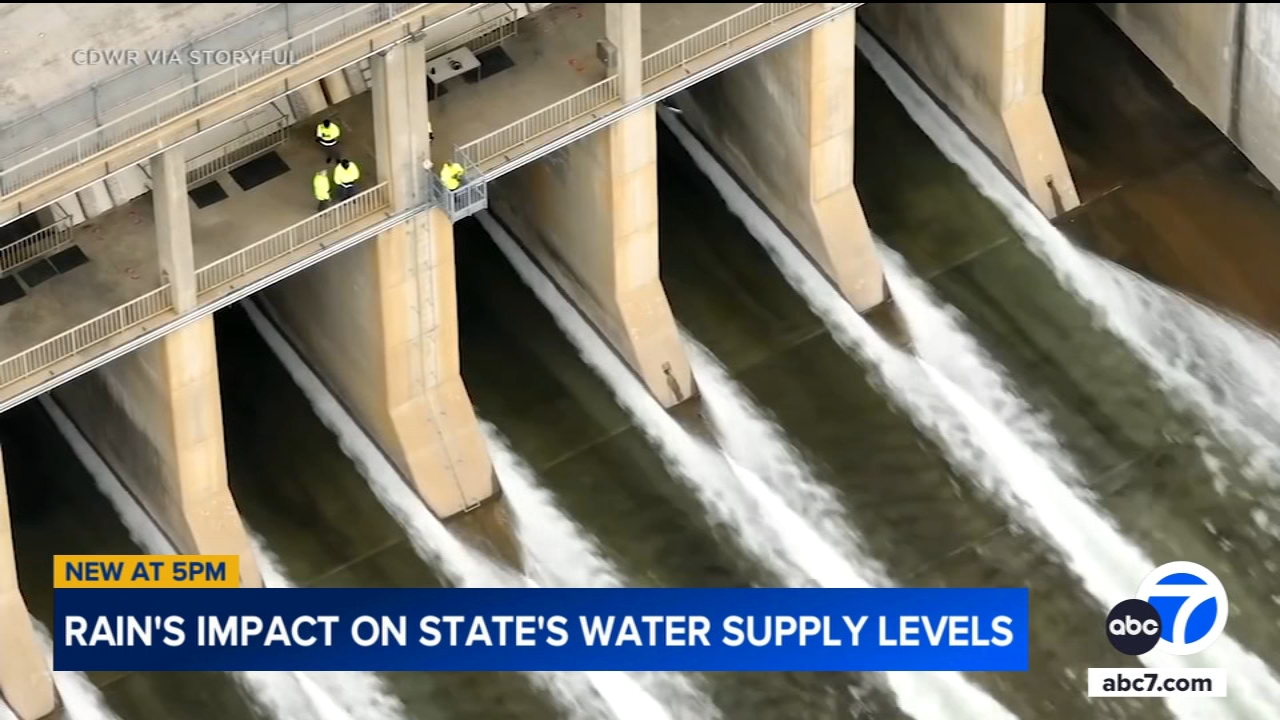
LOS ANGELES (KABC) -- When it rains, it pours, and that's a good thing when it comes to water supply levels in California, especially in Southern California.
Statewide, reservoir storage is now about 114% of the historical average, marking a significant improvement in water availability.
"We are going into this calendar year ... we're projected to go again with record-breaking storage in Metropolitan's facilities," said Demetri Polyzos, planning manager at the Metropolitan Water District of Southern California, the state's largest drinking water supplier. Polyzos said these record water levels could have a lasting, positive impact.
"We've made a lot of investments in storage here in Southern California," he explained. "Metro is unique because we're able to take advantage of the wet years, store that water so we can use it in those drier years. That helps us get through consecutive dry years."
Combined, there are about six trillion gallons of water in the reservoirs. That's enough to cover the entire state of Nevada in three inches of water.
Above-average storage is especially notable given that the water year began only recently on October 1. Still, experts caution that the full effect of the recent weeklong rainstorms will take time to appear in official measurements.
"There's usually not an immediate observable impact after a rainstorm, but within a short period of time. A week's time, a couple weeks' time, we'll see those reservoir levels creep up even further," said Dr. Bwalya Malama, a Cal Poly professor specializing in groundwater.
The improved storage arrives just as drought conditions across California continue to diminish. A newly released drought map shows more than 70% of the state is now free from any drought designation. That's a dramatic shift from August, when nearly three-quarters of the state was experiencing drought - including a small area categorized in the most severe level.
Keeping water supplies stable through dry months and dry years remains a collective effort, and water agencies said residents have played a key role.
"We're seeing demand levels at the lowest levels we've seen at Metropolitan for decades, despite the fact that we have more people living here," Polyzos noted. "The messaging is working, and the people are responding. That's the only way this is going to work, because there's only so much water we have, and we have to stretch those supplies as much as we can."