Herbicide use in Orange County waterways draws scrutiny from environmental group, officials
ABC7 On Your Side investigates the use of herbicides in some O.C. waterways.


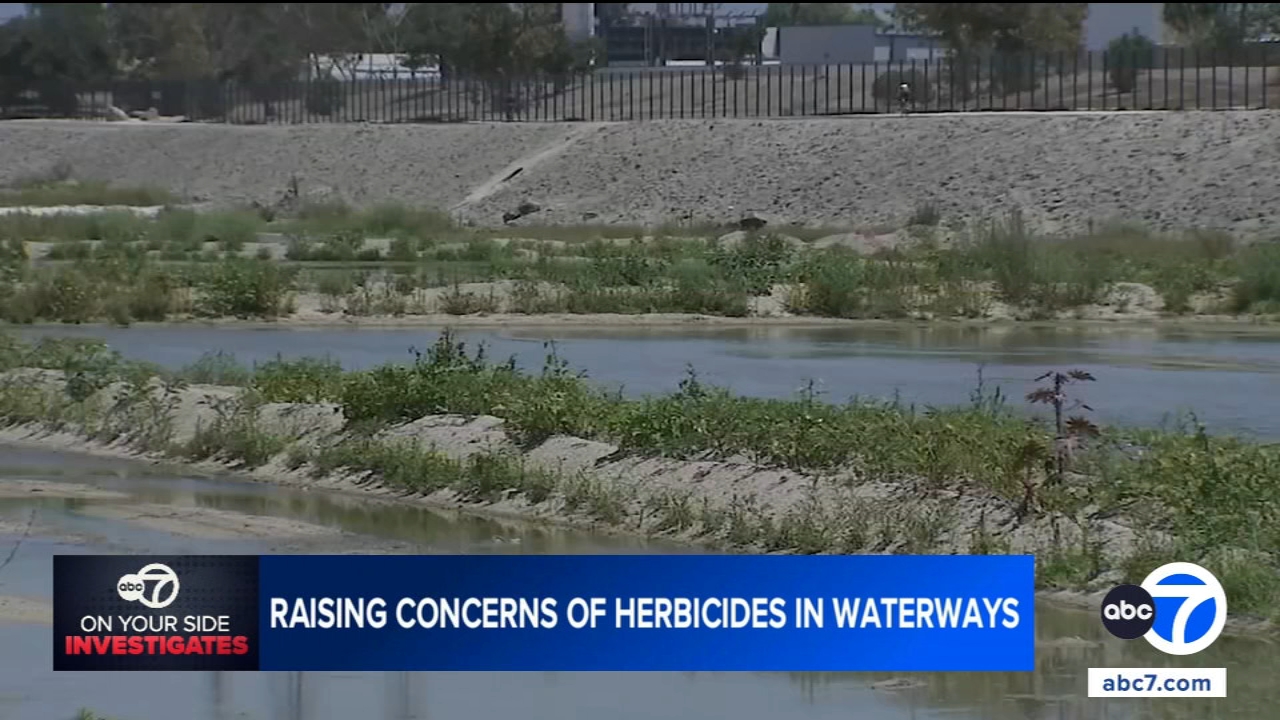
Environmental advocates are raising concerns about Orange County's use of herbicides in rivers and creeks, arguing that the practice should end altogether.
For the last five months, the OC Creek Team has been trying to alert the public that for years, Orange County has been spraying glyphosate-based herbicides into its rivers and creeks. The group says the spraying is widespread and has been occurring for years.
"So the Santa Ana River here gets sprayed with somewhere between 30- and 50,000 gallons of RoundUp annually. And that’s the standard across the county," said Brent Linas, founder of the OC Creek Team.
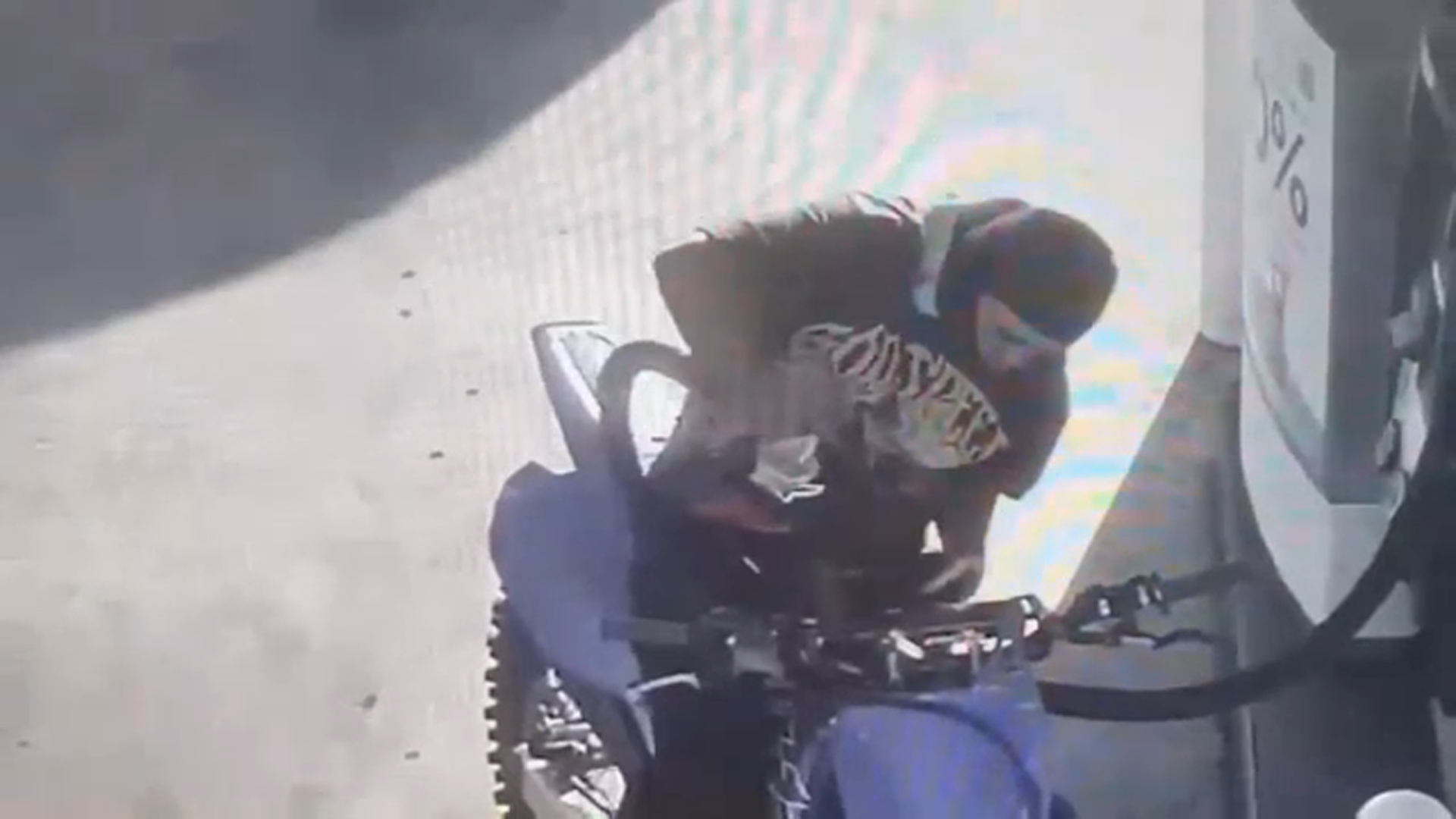
Videos posted on Instagram by the group show workers spraying herbicide in various Orange County waterways. According to the county, the vegetation management is tied to flood control efforts.
Linas said he became aware of the issue while jogging along San Juan Capistrano Creek.
"I noticed that this creek sometimes would be alive and sometimes it would be completely dead. It took me about two years to realize that someone was deliberately killing this creek," he said.
The OC Creek Team soon expanded, adding members like Bethany Nelms, who is now chief operating officer of the OC Creek Team.
"I said, 'What can I do to help.' I’m a mom, I have three small children that are in these waterways almost daily," said Nelms.
The group later added biochemist Robert Beard, known as Science Rob.
"They spray about 147 waterways a year - most years, going back at least 10 years," Beard said.
And it turned out they weren't alone in their concern.
"I was shocked to learn it as well, and I’ve been opposed to this for decades," said Orange County Supervisor Katrina Foley.
Foley has been leading an effort to end Orange County's use of herbicides like RoundUp. She brought up a motion at a board meeting last month to begin phasing out its use. The Creek Team waited seven hours to speak - but the phaseout failed to pass.
Supervisor Don Wagner voted against the measure.
"The state and the federal government have permits that allow us to use these chemicals," Wagner said.
"RoundUp in the river sounds bad, and of course it does. But again the short answer is the amount of RoundUp that is being used in the rivers, according to the science we’ve heard, does not pose the risk that these groups say it poses, he said.
But according to Foley, "while there are state-approved practices and protocols, our contractors were not following those practices and protocols."
That's what ABC7 found as well.
Earlier this year, both the California Environmental Protection Agency and the Santa Ana Water Board, which oversees much of Orange County's waterways, found that Orange County Public Works was not complying with regulations in some of their monitoring and testing of glyphosate levels in waterways.
"There was one sample where the lab came back and said hey, we didn’t do this in time, it’s invalidated. We analyzed this too late. You can’t use this data. And it was a data point to say that the water returned to safe levels ... 11 days later, he signed off, on the record, ignoring that invalid result and passed it off to the public and the state water board as if it was valid," Beard said.
We reached out to Orange County Public Works for comment. They sent a statement that reads:
"We are in the process of reviewing two notices from the Santa Ana Regional Water Quality Control Board. We respectfully decline to comment on any details until after we engage with the Water Board."
Now here's where we need to talk about glyphosate. Many of you may have seen commercials for class-action lawsuits linking glyphosate herbicides, like RoundUp, with cancer. The truth is, it remains a topic of intense debate.
For years, Bayer and Monsanto, the owner and manufacturer of RoundUp, have paid $11 billion to tens of thousands of people who say RoundUp gave them cancer. Then just this year, the companies agreed to pay an additional $7.25 billion to cancer victims.
While the cancer research arm of the World Health Organization says glyphosate likely causes cancer, and the state of California in 2017 added glyphosate to its list of chemicals that do cause cancer, the U.S. EPA maintains that there is no likely link between the two - and Bayer has admitted no wrongdoing or liability. They maintain the product is safe.
Then there's the reason these rivers are being sprayed in the first place.
"Their whole justification for it is flood control. There’s an outdated idea, which has actually been changed over the past 15 years, that vegetation is not allowed in channels because it will slow water down," Beard said.
In fact, entities like L.A. and San Diego counties have already stopped their use of glyphosate, and portions of the L.A. River have been revegetated without additional flooding.
But Supervisor Don Wagner isn't buying it.
"You might want to double check that information. The information we’ve got is that surrounding counties, L.A. and San Diego in particular, had made a big show of ending the use of those chemicals, and then according to our staff who’ve been talking to their staff, they slowly started using them again because the alternative management just doesn’t work," Wagner said.
Los Angeles County Public Works disputed that claim in a statement.
"We have not used glyphosate-based herbicides (including RoundUp) since March 2019. Use of other herbicides in waterways is limited and, when applied, all activities comply with the regulations and monitoring requirements established by the California State Water Resources Control Board," said Kerjon Lee of Los Angeles County Public Works.
Despite the failed phaseout effort, members of the OC Creek Team point to recent developments as signs of progress. County supervisors have adopted several of the group's recommendations and temporarily paused herbicide spraying amid the regulatory violations.
In addition, a pilot program has begun in two creeks where no spraying will occur for the next year. Wagner supports the effort.
"Let's use that to gather the data we need. Get the information before we make a decision, rather than make a decision and then look for the information," he said.
Still, advocates say their work is far from finished.
"No, because pause means that it’s going to start again. So no, we have a little bit of a win, but we’re absolutely not done yet," Nelms said.