Whole-body MRI screenings gain popularity despite concerns from medical experts


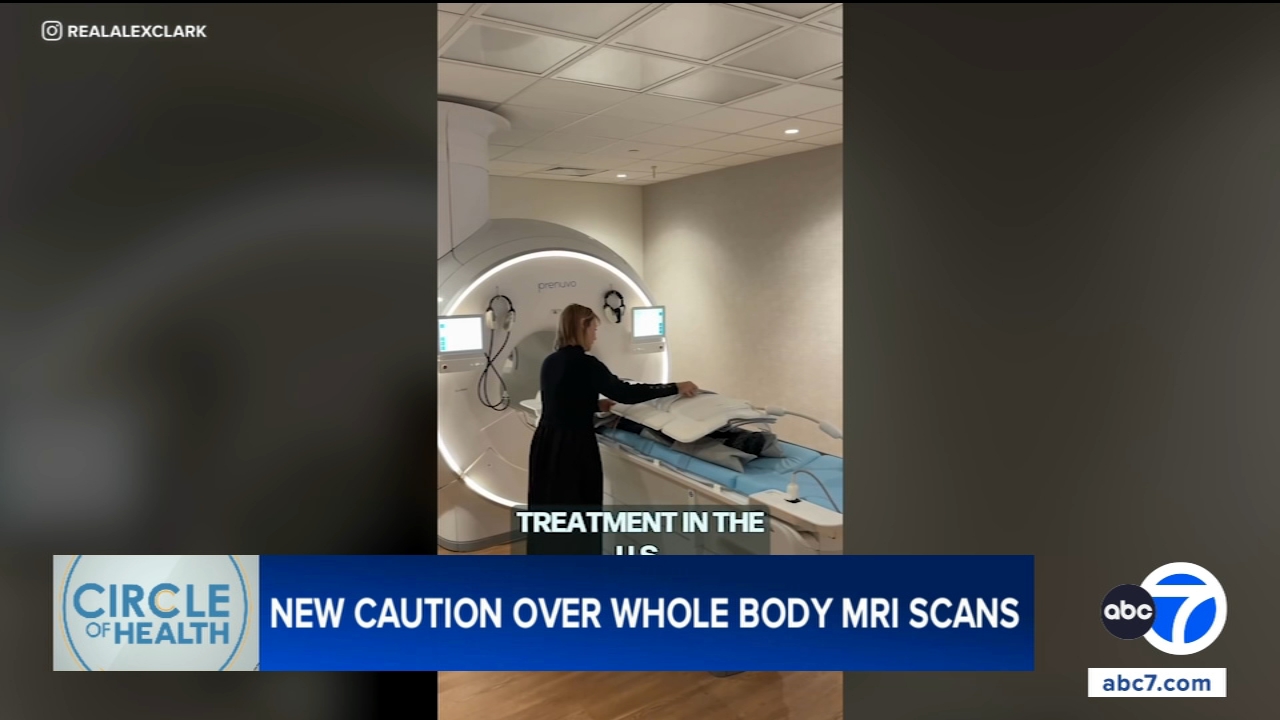
Elective whole-body MRI scans are seeing a resurgence in popularity, driven in part by social media promotion and growing consumer interest in early disease detection. Supporters say the scans can identify cancers and other health conditions before symptoms appear, but many medical experts caution that the screenings may cause more harm than good.
On social media, influencers have highlighted the potential benefits of whole-body MRI screenings.
"They're gonna scan for stage one cancers as well as 500 other conditions," one said.
"You deserve to know what's going on in your body even before symptoms appear," said another.
Companies offering the scans market them to consumers who want to identify cancer or other conditions as early as possible. Prenuvo, a company that offers direct-to-consumer whole-body MRI screenings, says findings that warrant additional evaluation are relatively common.
Chief Medical Officer Dan Durand said about one in five patients is likely to receive a finding that requires follow-up screening.
"It depends on the severity of what we find, and also how certain we are about what it is," Durand said.
While many physicians agree that early detection can be critical, major medical organizations advise against elective whole-body MRIs, arguing that the screenings do not necessarily improve survival outcomes and can lead to unnecessary testing and treatment.
Radiologist Dr. Robert Krasny of RadNet in Santa Monica said one of the primary concerns is the discovery of abnormalities that ultimately prove harmless.
"The classic downside is finding something that ultimately turns out to be nothing," Krasny said.
Doctors point to established screening guidelines for diseases such as breast and colon cancer as examples of situations where early detection has demonstrated benefits. However, they say research has shown that not all cancers fit that model.
"There are a number of prostate cancers that shouldn't be treated, and if you backtrack a little bit from shouldn't be treated, they probably shouldn't be found because they're causing more anxiety and more difficulty," Krasny said.
Krasny also cited an editorial in the Journal of the American Medical Association discussing a study on ovarian cancer screening. According to the editorial, 212 women in an elective screening group were diagnosed with ovarian cancer, but mortality outcomes were the same when compared with patients who were not screened. The authors also reported that more than 1,000 women who were screened underwent unnecessary surgery.
"They may not have been symptomatic yet, but they weren't found in any different stage than they might have been found if they were symptomatic or found later," Krasny said.


Durand acknowledged that some patients may value information from screenings regardless of whether the scans improve survival outcomes.
"I will say, as an individual, even if there were no benefit in survival for me, I would want to know. I have enough people relying on me that if the difference is merely between me knowing about something and not knowing about it. I would want to know," Durand said.
The cost of elective whole-body MRI scans typically ranges from $1,500 to $4,000 and is rarely covered by insurance.
"Just because something like this is offered doesn't necessarily mean that it's the right test for you and doesn't mean that it will give you the comfort that you think you want," Krasny said.
Durand said whole-body scanning is part of what he sees as a growing movement in medicine. In addition to cancer screening, he said Prenuvo's staff often identifies findings related to cardiovascular and orthopedic health.
"I think this should be an option for everybody," Durand said.
Krasny encouraged patients to discuss any concerns about their personal, family or occupational history with their physicians before seeking elective screening.
"This is where a good conversation with your primary referring physician is warranted," Krasny said.
Ultimately, physicians say patients should carefully weigh the potential benefits and drawbacks of elective whole-body MRI screenings before making a decision.